How to Use a Scroll Saw for Beginners
A scroll saw for beginners should fit your projects and make blade changes easy. Secure the saw and fit a suitable blade, then practice on flat scrap with a steady feed before cutting your first pattern.
On this page (9 sections)
- What should a beginner know before using a scroll saw?
- How do you set up a scroll saw?
- How do you make your first scroll saw cut?
- How do you cut curves and corners?
- How do you make an interior cut?
- How should you control speed and feed?
- What mistakes and care habits matter most?
- How do you choose a scroll saw for beginners?
- Which first saw should you choose?
A scroll saw for beginners should make it easy to guide small workpieces and change blades for interior cuts. Secure it to a stable surface, install a suitable blade, and learn on flat scrap before starting a detailed pattern.
Choose your first saw around the projects you'll make. Panel size, blade access, and storage space matter more than chasing the highest speed or thickest cutting capacity.
What should a beginner know before using a scroll saw?
A scroll saw uses a narrow blade that moves up and down to cut curves, patterns, and enclosed shapes. You steer the wood by hand, so steady control matters more than pushing hard.
It suits ornaments, fretwork, and small shaped parts. For examples that can help you choose a first project, see what a scroll saw is used for.
Read the manual before plugging in, especially its blade, tension, hold-down, and mounting instructions. Wear eye protection, secure long hair, and keep loose clothing and jewelry away from moving parts.
Keep your fingers out of the blade path and wait for a full stop before clearing scraps. Unplug the saw before blade changes or adjustments, and use dust extraction and protective equipment appropriate to the material.
How do you set up a scroll saw?
Start with a stable bench, a correctly installed blade, and a clear cut line. A shaky support makes precise steering harder even when the saw itself is set correctly.
- Secure the saw to a level surface as its manual directs.
- With power disconnected, inspect the blade for damage and fit it in the correct orientation.
- Tighten the holders and set tension according to the manual.
- Check that the table is square to the blade for ordinary upright cuts.
- Set the hold-down close to the work as directed, without preventing smooth movement.
- Position the light, blower, and dust hose so they don't obstruct the wood.
Turn a large practice piece through its planned path before starting. This reveals whether it will hit the saw arm, wall, or nearby tools.
A blower clears the line but doesn't collect airborne dust. Arrange extraction without letting its hose pull against the saw or crowd the table.
Which scroll saw blade should beginners choose?
Choose a compatible blade matched to the material thickness and curve size. Tooth count matters, but blade width also affects how tightly you can turn.
Coarser teeth leave more space for chips, while finer teeth suit thinner material and smaller details. A narrow blade follows tight curves more easily but is less forgiving of sideways pressure.
The FOXBC set suits beginners who have a compatible saw and want spare blades while learning different cuts. Keep the tooth groups separate so you can repeat a successful setup.
Skip this set if your saw requires another blade length or holder type. Don't assume it fits the Dremel simply because both tools are scroll saws.
How do you make your first scroll saw cut?
Start with straight lines and broad curves on flat, thin scrap. Choose a piece large enough to guide while keeping your fingers well away from the blade.
Mark several lines and identify the waste side. Cut just into that waste, leaving the finished shape slightly oversize for sanding rather than trying to correct every wobble at the blade.
Keep the wood clear when starting the saw, then bring it gently into the teeth. Hold it flat and use light forward pressure; visible blade bending means you're feeding too hard.
Follow with a broad curve, turning the wood gradually. Practice smooth movement before attempting a shape with several corners or fragile sections.
If the wood lifts or chatters, stop and check the hold-down, blade installation, and tension. Pressing harder can hide the cause and reduce control.
How do you cut curves and corners?
Cut curves by rotating the work gradually while maintaining light forward pressure. Slow your feed as the turn tightens, without twisting the blade sideways.
For an outside shape, relief cuts through the waste can let small sections fall away before they trap the blade. Plan these cuts so they don't cross into the finished part.
Don't force a blade around a corner tighter than it can follow. Use a narrower suitable blade, remove waste first, or approach the corner from another direction.
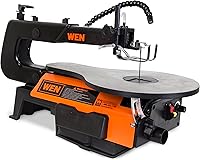
The WEN 3921 suits beginners who want a bench saw with a work light and flexible cutting direction. Its blade holders accept pinned and pinless blades, and pinned blades can turn 90 degrees for sideways cutting.
Skip it if packing the saw away after every session is your main need. Its cast iron base and 25.5-pound weight favor a planned bench position.
Learn square cuts before changing the table angle. For a closer look at its controls and features, read our WEN 3921 review.
How do you make an interior cut?
Make an interior cut by threading the blade through a drilled hole inside the waste area. This lets you remove an enclosed shape without cutting through its outer border.
Mark all waste sections clearly before drilling. Size each entry hole for the blade and its end, leaving room between the hole and the finished line.
Unplug the saw, release the blade as directed, and thread it through the hole. Secure it again and check tension before reconnecting power.
Cut from the hole toward the pattern, then follow its outline. Stop, unplug, and release the blade again to remove the workpiece.
For patterns with many openings, blade access becomes a buying priority because you'll repeat this process often. Our guide to using a drill press covers making controlled holes with that tool.
Who should choose a compact saw?
Choose a compact saw when shared bench space and storage shape your projects. The Dremel MS20-01 also suits work where taking the tool to the material would help.
Its fast-clamp base attaches to suitable work surfaces, and its quick-change mechanism includes automatic blade tensioning. The kit includes a storage case and vacuum adapter.
Skip this style if your main goal is a dedicated bench setup for larger panels. Check project clearance and compatible accessories before choosing it over a conventional saw.
For handheld work, secure the workpiece separately and follow the instructions for that mode. The way you support and guide the cut changes when the tool leaves its base.
How should you control speed and feed?
Match blade speed to the material and feed pressure to the cut. Speed is how fast the blade moves; feed is how quickly you advance the wood.
Follow the blade and saw guidance, then practice on scrap of the same material and thickness. Change one setting at a time so you can tell what helped.
A burning cut can come from a dull blade, poor tooth choice, or lingering in one spot. Check those causes instead of assuming a speed change will solve everything.
The WEN 3922 suits beginners planning repeated interior cuts, where access to the lower holder matters. It accepts pinned, pinless, and spiral blades, and runs from 550 to 1,600 strokes per minute.
Skip it if the 3921's sideways cutting option is central to your projects. Our WEN 3921 vs 3922 comparison explains those different priorities.
What mistakes and care habits matter most?
Avoid forcing cuts, rushing blade changes, and working around a fault. Stop when the cut changes instead of compensating with more pressure.
- Blade bends backward: ease the feed and check sharpness.
- Blade breaks repeatedly: check tension, installation, sideways pressure, and blade choice.
- Cut edges aren't square: check the table angle and whether you're flexing the blade.
- Wood catches during turns: widen the approach or remove waste before continuing.
- Dust hides the line: stop and clear it safely rather than leaning closer.
After each session, unplug the saw and remove dust from the table and accessible areas. Inspect blade holders and fasteners, and follow the manual's lubrication instructions rather than oiling parts at random.
Store blades dry and labeled by type. Replace damaged or dull blades instead of trying to finish one more shape with poor control.
Allow space for material movement and cleanup when planning the bench. See benchtop workshop machines for a home shop, and use the separate guide to tuning a band saw for that machine's adjustments.
How do you choose a scroll saw for beginners?
Choose a scroll saw for beginners by panel clearance, blade access, and bench space. Those factors affect everyday use more directly than maximum cutting thickness.
Throat depth is the distance between blade and rear frame. Both WEN models have a 16-inch throat and a stated wood capacity up to 2 inches thick, but thin stock is a better starting point for learning control.
A throat measurement isn't a simple maximum project width because the wood must rotate during curves. Sketch your largest planned shape and consider where the frame will restrict movement.
If your projects mainly involve thick stock or fast straight cuts, read scroll saw vs band saw before buying. Our best scroll saws guide offers a broader model comparison.
Which first saw should you choose?
Choose the WEN 3921 for its work light and sideways cutting option, or the WEN 3922 for easier lower-holder access during repeated blade threading. Choose the Dremel when storage and detachable use matter most.
Add the FOXBC blades only after confirming compatibility. Start with a simple outline, then progress to a pattern with one interior opening.
The right scroll saw for beginners is one that fits both your projects and your setup routine. Use the scroll and band saws category guide to plan the next skill or tool your projects need.
Frequently asked questions
What is the easiest way to use a scroll saw?
Start with straight lines and broad curves on flat, thin scrap wood. Fit a blade suited to the material, secure the saw, and keep the work flat against the table; feed gently enough that the blade stays straight, then move to simple patterns once you can follow a line.
Should a beginner use a pinned or pinless scroll saw blade?
Choose the blade type your saw accepts and your pattern needs; pinned blades can simplify basic installation, while pinless blades pass through smaller entry holes for interior cuts. Check blade length and holder compatibility before buying, and unplug the saw before changing blades or fitting an adapter.
How fast should a beginner scroll saw run?
Use a speed recommended for your blade and material rather than choosing one setting for every cut; practice on matching scrap and adjust the feed so the blade stays straight. If the wood burns or lifts, stop and check blade sharpness, tension, tooth choice, and feed before changing speed.
Can you cut inside a piece of wood with a scroll saw?
Yes, start an interior cut through a drilled hole in the waste area. Unplug the saw, release a blade end as the manual directs, thread it through the hole, and secure it again; check tension before restarting, then cut toward the pattern while leaving the surrounding wood intact.