8 Best Scroll Saws (October 2026)
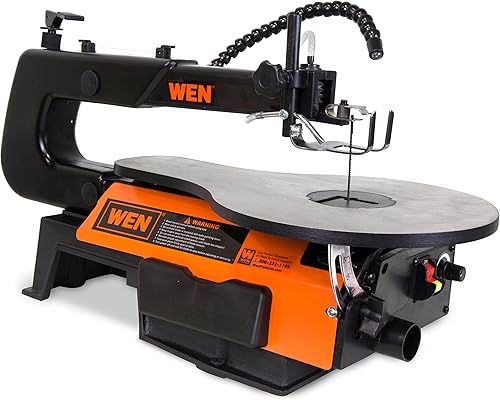
The best scroll saws include the WEN 3921 16-Inch Scroll Saw for mixed home projects, the WEN 3922 16-Inch Scroll Saw for repeated interior cuts, and the WEN 3923 16-Inch Scroll Saw for dim craft benches.
On this page (7 sections)
- Which best scroll saw pick fits your projects?
- What should you compare before buying a scroll saw?
- How should you set up a scroll saw before the first project?
- How do you get cleaner curves and interior cuts?
- Which scroll saw mistakes cause the most trouble?
- What care does a scroll saw need between projects?
- Which best scroll saw should you choose?
The WEN 3921 is the best scroll saw for most home woodworkers because it combines two blade directions, variable speed and a work light. Choose the WEN 3923 for illuminated interior-cut work, the Dremel MS20 for handheld coping or the DeWalt for angled patterns.
Start with the projects you want to finish: small ornaments, pierced panels and beveled pieces place different demands on a saw. Blade access can matter more than motor size when one pattern contains dozens of enclosed openings.
Read what a scroll saw is used for if you're choosing your first cutting machine. Our scroll saw beginner guide covers blade handling and the basic cutting sequence.
Our picks at a glance
-
1
-
2

-
3

- 4
 Best for shared workspacesCheck it
- 5
 Check it
SKIL SS9503 16-Inch Scroll Saw
Best for organized craft stations - 6
 Best for angled pattern workCheck it
- 7
 Check it
Ryobi SC165VS 16-Inch Scroll Saw
Best for occasional wood crafts - 8
 Best for broad fretwork panelsCheck it
Which best scroll saw pick fits your projects?
The WEN 3921 is the broadest starting point, but choose around your main task rather than the highest score alone. Interior cuts favor accessible blade holders, shared benches favor easy storage, and angled work calls for the right bevel arrangement.
CivilCupboard compared cutting capacity, blade access, work support and controls. The scores reflect those features and their fit for common home projects.
WEN 3921 16-Inch Scroll Saw: Best for mixed home projects
- Two blade directions
- Variable speed up to 1600 strokes per minute
- 16-inch throat
- Work light and air pump
Choose the 3921 for varied wood patterns and longer cuts that benefit from turning the blade direction. Its work light and air pump help keep the pattern visible.
Pros
- Standard and 90-degree blade directions
- Accepts pinned and pinless blades
- Work light and onboard storage
Cons
- Standard cutting direction has a 16-inch throat
- Table bevels left only
Choose the WEN 3921 for a mix of ornaments, decorative shapes and longer cuts. Its holder accepts standard blade positioning or a 90-degree direction, giving you another way to feed material when the rear arm would block a straight cut.
That option is useful for long pieces, but it doesn't remove every clearance limit. A wide panel still needs support and room to turn without striking the arm.
The saw accepts pinned and pinless blades, with a thumb screw adapter for tool-free changes. Its work light, air pump and onboard storage bring useful daily features into one machine.
WEN gives a wood cutting capacity of up to 2 inches, though fine pattern work in thick wood still needs careful blade selection and a slow feed. Skip it for frequent opposite-direction bevels, since the table tilts left only.
Our WEN 3921 scroll saw review takes a closer look at its fit for a home bench.
WEN 3922 16-Inch Scroll Saw: Best for repeated interior cuts
- Flip-open side panel
- 550 to 1600 strokes per minute
- Accepts pinned, pinless and spiral blades
- 16-inch throat
The opening side panel gives access to the lower blade holder for patterns with repeated enclosed cutouts. Choose it when blade access matters more than built-in lighting.
Pros
- Opening side panel
- Accepts pinned, pinless and spiral blades
- Tool-free blade adapter
Cons
- No built-in work light among its features
- Wide patterns still need turning clearance
Choose the WEN 3922 when your patterns contain many separate interior openings. Each opening requires releasing the blade, threading it through an entry hole and securing it again, so access to the lower holder becomes part of every project.
The flip-open side panel gives you access to that holder. Its thumb screw adapter also allows tool-free blade changes.
Compatibility includes pinned, pinless and spiral blades, giving you choices as your patterns change. Spiral blades cut in multiple directions, but they need different steering habits from a straight blade.
This saw suits a bench that already has useful task lighting. Choose the 3923 instead if you want an integrated light, or the 3921 if sideways blade positioning is your main reason for buying.
Neither choice should depend on model numbers alone. Our WEN 3921 vs 3922 comparison explains the practical split between cut direction and lower-holder access.
WEN 3923 16-Inch Scroll Saw: Best for dim craft benches
- Flexible work light
- Flip-open side panel
- 550 to 1600 strokes per minute
- 16-inch throat
The 3923 combines lower-holder access with a flexible work light. It suits detailed cutouts at a bench where overhead lighting leaves shadows.
Pros
- Flexible work light
- Opening blade-access panel
- Accepts pinned, pinless and spiral blades
Cons
- Same throat depth as the other WEN picks
- Table bevel stops at 45 degrees
The WEN 3923 suits detailed cutout work where overhead lights leave the blade area in shadow. It combines a flexible work light with the opening side panel found on the 3922.
That pairing makes sense for pierced letters and decorative panels with repeated blade threading. Aim the light to reveal the pattern without putting glare directly in your eyes.
Its air pump helps move loose sawdust away from the line, while the dust port gives debris a collection route. Neither feature removes the need to keep the work supported and feed it at a controlled pace.
The holder accepts pinned, pinless and spiral blades, so you can choose around the entry-hole size and shape of the cut. Skip the 3923 if you need more reach, since it has the same throat depth as the other WEN picks.
Choose it for the light and access combination, rather than expecting a larger cutting envelope.
Dremel MS20 Moto-Saw: Best for shared workspaces
- Detachable handheld coping function
- Fast-clamp base
- Auto-tensioning blade mechanism
- Storage case and vacuum adapter
The clamp base and storage case suit a workspace that must clear away between projects. The saw also detaches for handheld coping work.
Pros
- Stationary and handheld use
- Tool-free changes with auto tensioning
- Clamp base and storage case included
Cons
- Needs a suitable clamping surface
- Blue edge guide locking levers are not included
The Dremel MS20 Moto-Saw is the clearest choice for a shared workspace that must return to another use. Its fast-clamp base attaches to a suitable surface, and the storage case helps keep the tool and accessories together afterward.
It also detaches for handheld coping work, allowing you to bring the tool to a secured workpiece. That is a distinct use from feeding material across a stationary table.
The blade mechanism offers tool-free changes and auto tensioning. Those features reduce manual setup steps, though you still need the correct accessory for the material.
Dremel identifies wood, plastic, laminates and metal as applications with suitable blades. Skip it if your priority is broad panel support on a permanent woodworking bench.
Before choosing it, check that your work surface has an accessible, suitable edge for the clamp. Blue edge guide locking levers shown on some packaging are not included in the kit.
SKIL SS9503 16-Inch Scroll Saw: Best for organized craft stations
- Integrated LED work light
- Dust removal system
- Electronic variable speed
- Keyless changes and blade storage
Choose the SKIL for a craft station with built-in lighting, dust removal and nearby blade storage. Keyless changes reduce the need to keep a separate change tool at the bench.
Pros
- Integrated LED work light
- Keyless blade changes
- On-tool blade storage
Cons
- Table tilt stops at 45 degrees
- 24.7 lb weight needs planning for storage
Choose the SKIL SS9503 for a dedicated craft station where blade storage, lighting and cut-line clearing belong at the machine. Its integrated LED work light and dust removal system address two common interruptions: shadows and sawdust hiding the pattern.
Keyless blade changes mean you don't need a separate tool for that step. On-tool storage also gives spare blades a fixed home instead of leaving them loose on the bench.
The work table measures 16 x 10 inches and tilts from 0 to 45 degrees. Electronic variable speed lets you adjust cutting pace as the material and pattern change.
This is a sensible fit if you value those bench features together. Choose the DeWalt for explicit left-and-right table bevels, or the Dremel if clearing the whole station after each session is essential.
At 24.7 lb, the SKIL also needs a planned storage location if it won't stay on the bench.
DeWalt 20-Inch Scroll Saw: Best for angled pattern work
- Front-access controls
- 400 to 1750 strokes per minute
- Double parallel-link arm design
- Table bevels 45 degrees left and right
The cast iron table tilts both ways for projects that need opposite bevel directions. Front upper-arm controls keep speed, power and tension adjustments within reach.
Pros
- Table bevels left and right
- Front-access controls
- Flexible dust blower
Cons
- 29.5 x 19.5 in footprint needs bench room
- Heavy at 30 kg
Choose the DeWalt for angled patterns that call for bevels in both directions. Its cast iron table tilts 45 degrees left and right, which gives you more choice in how you orient a piece for an angled cut.
Power, speed and blade-tension controls sit within reach of the front upper arm, along with the flexible dust blower. That layout suits work that calls for adjustments between cuts.
The speed range is 400 to 1750 strokes per minute. DeWalt describes the double parallel-link arm design as reducing vibration for smoother operation.
Skip it for a bench you clear after every session. Its 30 kg weight and 29.5 x 19.5-inch footprint call for a sturdy, planned location.
Leave space beyond the machine for the workpiece to rotate. Choose this saw for the bevel arrangement and control layout, rather than assuming every small craft project needs a larger machine.
Ryobi SC165VS 16-Inch Scroll Saw: Best for occasional wood crafts
- 1.2 A motor
- Tool-free blade changes
- Integrated dust blower
- 45-degree cutting angle
The Ryobi covers occasional pattern work with tool-free blade changes and an integrated blower. Choose it when those core features cover your projects.
Pros
- Tool-free blade changes
- Integrated dust blower
- Blade, hex wrench and switch key included
Cons
- 27 lb weight needs planning for storage
- Confirm blade compatibility for fine interior patterns
The Ryobi SC165VS fits occasional wood crafts when tool-free blade changes and a built-in blower cover your needs. A blade, hex wrench and switch key are included.
Its 1.2 A motor and 45-degree cutting angle describe a basic woodworking setup. The stronger reason to choose it is that its core features match the work you expect to do.
For fine enclosed patterns, confirm the exact blade and holder compatibility before committing. Small entry holes require a blade arrangement that can pass through them, not just a convenient change mechanism.
Choose another pick if built-in lighting or a locking raised arm is central to your workflow. Those features give the WEN 3923 and BUCKTOOL clearer roles for those jobs.
At 27 lb, the Ryobi needs a stable position and a practical lifting route if stored between sessions. For bench layout ideas, see what a home shop needs first.
BUCKTOOL 22-Inch Scroll Saw: Best for broad fretwork panels
- 27 x 13-inch work table
- 360 to 1550 RPM variable speed
- Upper arm locks raised
- Adjustable blower and dust port
The broad table supports larger panels while the upper arm locks raised for blade threading. Its beveling arm suits angled work without tilting the table.
Pros
- Broad work table
- Raised arm locks for blade access
- Includes 15 and 18 TPI pinless blades
Cons
- Large table needs bench clearance
- Left arm bevel stops at 30 degrees
Choose the BUCKTOOL for broad fretwork panels that benefit from more table support. Its 27 x 13-inch work surface provides room around the blade, while the upper arm can lock raised for blade replacement and interior-cut setup.
The arm bevels 30 degrees left and 45 degrees right. Unlike a tilting-table arrangement, that lets the work remain on a level table during angled cuts.
It includes 5-inch pinless blades in 15 and 18 TPI, plus an adjustable blower and dust port. BUCKTOOL states the variable speed range as 360 to 1550 RPM; don't treat that unit as directly interchangeable with another saw's strokes-per-minute figure.
Skip it if your bench space is tight or you mainly cut small ornaments. A broad table needs useful clearance around it, not just room for the machine itself.
The raised-arm feature is the key reason to consider it for projects with repeated interior openings.
What should you compare before buying a scroll saw?
Choose by pattern clearance, blade threading and work support before comparing accessories. These determine whether the saw can handle your projects comfortably.
How much clearance does the best scroll saw need?
Allow room for the whole workpiece to rotate around the blade. Throat depth measures blade-to-rear-arm reach; it doesn't describe every shape that can fit through a cut.
A narrow, long board may be easy to feed until you turn it across the machine. Likewise, an opening near the center of a broad panel may be unreachable even when the table supports the panel well.
Make a cardboard copy of your largest planned piece and mark each interior cut. Check the distance from those cuts to the edges, then consider how the piece must rotate through the pattern.
Don't confuse blade length with machine size. Replacement blades must match the holder and required blade length, so use the model's instructions when buying spares.
Which blade system suits enclosed patterns?
Choose pinless blades for small entry holes when your saw supports them. A pinned blade needs enough clearance for its cross pin, which can restrict delicate interior work.
Blade width affects how tightly you can turn, while tooth spacing affects chip clearance and the finish. Match the blade to the material thickness and detail instead of using one blade for every project.
More teeth aren't automatically better. Fine teeth can suit thin material, while thicker stock needs enough space between teeth to carry waste out of the cut.
Buy a small selection of compatible blades before starting an important pattern. Keep the packaging so you can identify a useful blade later instead of guessing from its appearance.
Does a large table replace a long throat?
A large table supports material, while a long throat gives more reach behind the blade. Neither measurement replaces the other.
Support matters when an overhanging panel tries to tip or pull your hands away from a steady feeding position. Additional support should sit level with the saw table and allow the material to turn freely.
For interior cuts, you'll also need a way to make entry holes. A hand drill can handle many small projects; our benchtop drill press guide helps if repeated hole placement is part of your wider shop work.
When should bevel direction decide the purchase?
Let bevel direction decide when your planned pieces require angled edges or matching sloped parts. Flat ornaments and most beginner practice patterns don't need that feature.
A tilting table changes how gravity acts on the workpiece, so you must keep the stock controlled against the surface. A beveling arm changes the blade angle while keeping the work surface level.
Before cutting a fitted angled part, check the angle on scrap of the same thickness. Keep track of the top face and feed direction, since reversing either can change how the finished parts fit.
How should you set up a scroll saw before the first project?
Start with a stable mounting surface, a correctly fitted blade and clear workpiece travel. Follow the model's instructions for mounting, tension, guards and hold-down adjustment.
Place the saw where you can sit or stand without hunching over the table. Keep the switch reachable without leaning across the blade, and route the power cord away from moving stock.
Disconnect power before fitting blades or reaching near the holders. For a standard straight wood-cutting blade, check the tooth direction against the manual rather than assuming it arrived ready to cut.
Tension the blade as instructed, then confirm the clamps are secure. Loose tension allows sideways movement, while excessive tension can contribute to blade breakage.
Check table squareness with a small square and make a short practice cut in scrap. A slight angle error becomes more obvious in thicker pieces and fitted joints.
Set the hold-down according to the manual so the stock stays controlled while feeding freely. Don't treat it as a clamp that locks the board against movement.
Aim the light and blower before starting. A blower clears the pattern, while extraction handles airborne and collected dust; our small-shop dust collector guide explains broader collection choices.
Wear eye protection and use suitable dust protection for the material. Keep guards in place, tie back long hair and avoid loose sleeves or jewelry around moving parts.
How do you get cleaner curves and interior cuts?
Use a suitable sharp blade and a gentle feed, letting the blade remove material without bending sideways. Speed control helps, but it cannot correct a poor blade choice or forced feed.
Start with scrap matching your project thickness and practice broad curves before tight turns. Adjust one thing at a time so you can tell whether blade choice, speed or feeding pressure caused the change.
For an enclosed opening, drill an entry hole inside the waste area. Disconnect power, release the blade as instructed, thread it through the hole and secure and tension it before restarting.
Plan interior cuts before removing the outer shape when that leaves more support around delicate details. Keep enough surrounding wood to hold and guide the piece safely.
Approach sharp corners slowly rather than pushing the work sideways against the blade. Where the design permits, use waste-area relief cuts to give the blade room to change direction.
Stop the saw if a small offcut becomes trapped near the blade. Wait for motion to end and disconnect power before clearing it.
Stay aware of your hand position as the piece gets smaller. If a detail cannot be guided with your fingers safely clear, change the cutting plan or workholding method.
Which scroll saw mistakes cause the most trouble?
The most common problems come from forcing the cut, using the wrong blade and ignoring support. Correct the setup before trying to steer harder.
- Pushing through thick stock too fast: Ease the feed so the blade can clear waste without bowing.
- Using a dull blade: Replace it when cutting takes more effort or the blade stops following the line cleanly.
- Choosing a blade too wide for the turn: Use a compatible narrower blade for tighter curves.
- Ignoring rocking stock: A flat underside helps keep the work steady on the table.
- Leaving large panels unsupported: Support overhangs without blocking rotation or creating a snag.
- Chasing maximum speed: Choose a pace that lets you guide the line with control.
- Starting on the finished piece: Make a scrap cut first, especially after changing blades or bevel settings.
A scroll saw also has limits as a general shop saw. For long straight cuts, heavy stock preparation or resawing, our band saw vs scroll saw guide helps you choose the right machine.
What care does a scroll saw need between projects?
Keep blade holders, table surfaces and moving mechanisms free of packed dust. Disconnect power before cleaning or inspecting the machine.
Remove debris with a brush or suitable vacuum rather than pushing it deeper into openings. Follow the manual for lubrication; adding oil everywhere can attract dust and contaminate workpieces.
Check blade clamps and mounting hardware regularly, especially if vibration changes. Inspect the cord and stop using the machine if a guard, holder or control is damaged.
Store spare blades where their teeth won't catch your hands or become bent. Separate them by type and tooth count so the right blade is easy to find.
Follow the manufacturer's guidance on releasing blade tension during storage. Before the next session, check tension, table angle and workpiece clearance again instead of relying on the last setup.
Which best scroll saw should you choose?
Choose the WEN 3921 for varied home projects, the 3922 for repeated interior cuts with separate bench lighting, or the 3923 when you want that access with a built-in light. Those are the clearest starting points for a home pattern-cutting bench.
Pick the Dremel when the workspace must pack away or handheld coping matters. Choose the SKIL for an organized craft station, or the Ryobi when its basic blade-change and blower features cover occasional work.
The DeWalt makes sense for opposite-direction table bevels, while the BUCKTOOL suits broad panels and raised-arm blade access. Buy around the task you repeat most, then check the space needed to rotate your largest piece.
The best scroll saw for your shop is one you can thread, adjust and feed comfortably through the whole project. Use the scroll saw beginner guide to plan your first practice cuts before starting a detailed pattern.
Our top 3 picks at a glance
-
1
-
2
-
3
Frequently asked questions
What should you look for in a scroll saw?
Prioritize throat clearance, blade compatibility and access to the lower blade holder. Those features determine which patterns fit and how easily you can thread a blade through enclosed cutouts.
Then compare table support, speed control and lighting against your work, leaving enough bench space to turn the whole workpiece.
Is a 16-inch or 20-inch scroll saw better?
A 16-inch saw suits many small patterns, while larger work can justify more clearance. Compare actual blade-to-arm reach rather than relying only on a model name.
Draw your largest pattern on scrap cardboard and rotate it around the intended blade position to check clearance before choosing a saw.
Do scroll saws use pinned or pinless blades?
Blade compatibility depends on the holder, so choose the blade system before buying spares. The WEN 3921 accepts pinned and pinless blades; the 3922 and 3923 also accept spiral blades.
Pinless blades are useful for small entry holes because there is no cross pin to pass through the opening.
Can you use a scroll saw for handheld cuts?
Use a scroll saw handheld only if it is designed for that purpose. The Dremel MS20 Moto-Saw detaches from its base for handheld coping work.
Secure the workpiece and follow the instructions for that mode; our guide to using a scroll saw covers the basic cutting habits for getting started.
What is the difference between a scroll saw and a band saw?
A scroll saw uses a short reciprocating blade for fine curves and enclosed cutouts. A band saw uses a continuous blade loop and better suits broader cuts and resawing.
Choose by your projects first; our band saw vs scroll saw comparison explains which machine makes more sense as your first saw.