WEN 3921 vs 3922 Scroll Saw: What Is the Difference? (October 2026)
In the WEN 3921 vs 3922 comparison, choose the 3921 for long workpieces needing another feed direction or the 3922 for frequent interior cuts. The 3921 includes a work light, while the 3922 has a flip-open panel for lower blade access.
On this page (10 sections)
- WEN 3921 vs 3922: what is the main difference?
- Which saw suits frequent interior cuts?
- When does the 3921's turning blade help?
- How do speed, thickness and throat depth affect the choice?
- Which setup gives you a clearer cut line?
- How should you set up either saw?
- What mistakes should you avoid during cuts and blade changes?
- What care do these saws need between projects?
- Is the WEN 3923 worth considering?
- WEN 3921 vs 3922: which should you choose?
Choose the WEN 3921 for long workpieces that need another feed direction and the 3922 for patterns with frequent interior cuts. The WEN 3921 vs 3922 decision is mainly about workpiece clearance versus access to the lower blade holder.
The 3921 also includes a flexible work light. If you want a light alongside the 3922's flip-open access panel, the 3923 combines those features.
Start with the projects you plan to make, rather than treating the higher model number as an automatic upgrade. A long decorative board and a small fretwork panel can place very different demands on a scroll saw.

WEN 3921 vs 3922: what is the main difference?
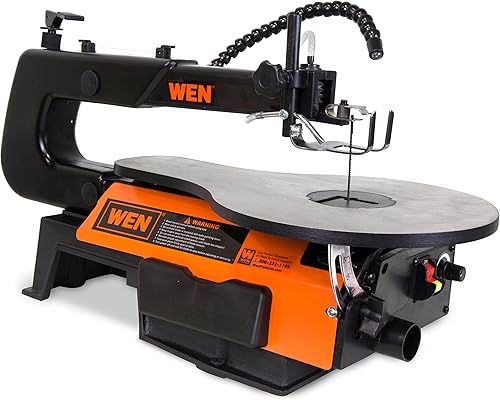
The main difference is two-direction cutting on the 3921 versus flip-open blade access on the 3922. These features solve separate problems, so neither model is the better choice for every pattern.
On the 3921, you can reposition a pinned blade 90 degrees using the front holder. That changes the feed direction and lets suitable workpieces extend past the restriction imposed by the saw's arm in the standard position.
The 3922's side panel opens so you can reach the bottom blade holder. This matters for enclosed cuts, where you drill a starter hole and thread the blade through the workpiece before cutting.
WEN 3921 vs 3922 for your first projects
Choose the 3921 for long outlines when sideways feeding solves a clearance problem. Choose the 3922 for enclosed details when your pattern requires repeated blade removal and reattachment.
A small ornament cut only around its outside edge gives you little reason to favor the access panel. A fretwork design with many separate openings makes lower-holder access a recurring part of the job.
Lay out a full-size pattern before deciding. Trace how the workpiece must turn around the blade, then count the enclosed areas that require separate entry holes.
Which saw suits frequent interior cuts?
The 3922 is the stronger fit for repeated blade threading because its panel opens access to the lower holder. Both models have a thumb screw adapter for tool-free blade changes.
For an interior cut, the blade must pass through a starter hole before it can cut the enclosed shape. Each separate opening repeats part of that process, so holder access matters more as the number of openings grows.
The 3922 accepts pinned, pinless and spiral blades. Its starter set includes a 15 TPI pinned blade, an 18 TPI pinned blade and an 18 TPI pinless blade.
The 3921 accepts pinned and pinless blades and has onboard storage for blades and holders. It remains suitable for interior work, but choose the 3922 when access during repeated blade changes is your main concern.
Pinless blades are useful for fine patterns because a small blade can pass through a hole without needing clearance for end pins. Match the starter hole to the blade and holder arrangement described in the manual.
Spiral blades cut in several directions around their circumference, which changes how you guide the work. Their compatibility is useful if you want that technique, but they aren't a shortcut to clean, accurate curves.
Our beginner's guide to using a scroll saw explains the sequence for enclosed cuts. Learn that sequence before starting a pattern with many small openings.
When does the 3921's turning blade help?
The 3921's sideways blade position helps with suitable long cuts that would otherwise run into the saw's arm. It is a clearance feature, not an increase in cutting power.
WEN calls this infinite ripping capacity. Read that as freedom from the standard throat restriction in the changed cutting direction, rather than a promise that any board or pattern will fit.
A long blank still needs steady support as it moves across the table. Unsupported weight can tip the workpiece or twist the blade, even when the cut itself clears the arm.
Check the entire cut path before switching on the saw. A straight section may fit sideways while a later turn brings the workpiece back toward the arm or another obstruction.
Skip the 3921's direction feature as a buying priority if most of your work consists of compact shapes. In that case, the access panel may solve a problem you'll encounter more often.
For examples of suitable projects, see what a scroll saw is used for. If your main goal is breaking down boards or making heavier cuts, our band saw vs scroll saw guide helps you choose the right tool category.
How do speed, thickness and throat depth affect the choice?
Both saws have a 16-inch throat depth, cut wood up to 2 inches thick and reach 1600 strokes per minute. Those shared limits make project shape and blade access more useful buying differences than maximum capacity.
Throat depth is the distance from the blade toward the back of the saw. It affects how far a workpiece can extend in that direction and how much room you have to turn a pattern.
Thickness capacity describes the wood that fits within the saw's stated cutting limit. It does not mean every species, blade and detailed pattern will cut equally well at that limit.
For a first project, thinner stock with a simple outline is easier to control than a thick blank with tight curves. Choose a blade suited to the material, thickness and smallest turns.
The 3922's speed range is 550–1600 strokes per minute. WEN gives conflicting minimum speeds for the 3921, so confirm its lower setting in the manual if a specific slow speed affects your choice.
Use scrap from the same material to settle on a speed and feed rate. If you have to push hard, stop and check blade suitability, sharpness and tension rather than forcing the cut.
Both tables bevel up to 45 degrees, with the 3921 tilting to the left. Bevel cuts need extra planning because the blade passes through the stock at an angle and changes the finished edge.
Our WEN 3921 scroll saw review takes a closer look at that model if its cutting direction suits your work.
Which setup gives you a clearer cut line?
The 3921 includes a flexible work light for aiming light at the pattern. Both saws have an adjustable air pump and a dust port, which handle different parts of sawdust control.
Aim the light so your hands don't cast a shadow across the next part of the cut. Keep enough general room lighting to see the workpiece edges, controls and surrounding bench.
Point the air nozzle toward the blade's contact area without putting it in the workpiece's path. The pump clears the line; it doesn't collect the dust it moves.
The dust ports are 1.5 inches, so check your hose and adapter fit before arranging the bench. Leave room for the hose to bend without pulling on the saw or blocking access.
Our small-shop dust collector guide explains collection options. Follow the saw's manual for suitable extraction and personal protection.
For other machines with different combinations of features, see our best scroll saws guide. Compare them around your pattern size and blade-changing needs.
How should you set up either saw?
Mount either saw on a stable work surface, then check the blade, table and workpiece clearance before cutting. Both have cast iron bases, but the bench and mounting still matter.
Use the mounting method specified in the manual. A flexible or uneven surface can let the whole setup move, making it harder to follow a narrow pattern line.
Place the saw where you can sit or stand comfortably without reaching across the blade. On a model with an access panel, leave that side clear so the feature remains useful.
Our small woodworking shop setup guide can help you plan bench space around nearby tools. Include room for the workpiece to rotate, not just room for the machine.
With the saw unplugged, check that the blade is seated correctly and tensioned according to the manual. For a conventional straight blade, confirm the teeth face the required cutting direction.
If the project needs square edges, check the table against the blade with a suitable square. Secure the bevel setting before making a short practice cut in scrap.
Adjust the hold-down foot according to the manual so the work stays controlled without being trapped. Your hands still guide the stock; the foot does not replace careful feeding.
Before starting, check that the cord, hose, light and nozzle stay clear throughout the planned movement. Wear eye protection, secure loose clothing and keep fingers away from the blade path.
What mistakes should you avoid during cuts and blade changes?
Avoid forcing the feed or twisting the blade to make a turn. Let the teeth remove material while you guide the workpiece with light, steady pressure.
Trying to turn more tightly than the blade allows can bend it sideways and spoil the cut. Use a narrower suitable blade or plan relief cuts where the pattern allows them.
Don't assume a coarse blade is better simply because the wood is thick. Tooth spacing must suit the material, while blade width must suit the curve.
Disconnect power before changing blades, repositioning the cutting direction or reaching into the holder area. Tool-free adapters make adjustments convenient, but the saw still needs to be isolated from power.
After a blade change, check seating and tension before returning to the pattern. A blade held at an angle or left loose can wander even when you guide the stock carefully.
For interior work, drill entry holes in waste areas and confirm the blade passes through without force. Keep holes far enough from the finished edge to leave room for a controlled approach.
Stop if the wood lifts repeatedly, the blade wanders or the cut starts to scorch. Check the setup and blade condition before continuing; more pressure usually makes those problems worse.
What care do these saws need between projects?
Keep the table and blade-holder areas clear of dust, and inspect the blade before the next project. Small scraps around the holder can make an otherwise simple blade change awkward.
Unplug the saw before cleaning it. Remove loose debris with a brush or suitable vacuum, taking care around the holder and moving parts.
Replace blades that are dull, kinked or damaged. Don't keep using a bent blade to finish a detailed pattern, since it can make following the line harder.
Check the mounting hardware, table lock and dust connection periodically. Follow the manual for tension release, lubrication and storage rather than applying oil to parts without guidance.
Store spare blades so their sizes and tooth patterns stay identifiable. Separating them by intended material or cut type makes it easier to choose the right one next time.
Is the WEN 3923 worth considering?
The 3923 suits buyers who want both lower-holder access and a flexible light. It combines those conveniences without making the 3921's direction feature part of the decision.
Like the 3922, it accepts pinned, pinless and spiral blades. Its speed range and stated cutting capacity match the 3922, so consider it for the light and access arrangement rather than greater capacity.
Skip the 3923 as a priority if your bench already has well-positioned task lighting and the 3922 meets your needs. Put your attention into blade choice, mounting and workpiece support.
It also won't solve a project that needs more throat clearance or thicker stock than these saws accommodate. In that situation, reconsider the machine size or saw type before choosing among model numbers.
WEN 3921 vs 3922: which should you choose?
Pick the 3921 when a long workpiece needs sideways feeding; pick the 3922 when enclosed patterns make blade threading a regular task. Choose the 3923 when you want the access panel and still need an adjustable light at the cut.
Before ordering, trace one planned project at full size and identify its hardest step. Clearance favors the 3921, repeated lower-holder access favors the 3922, and a need for both access and directed light points toward the 3923.
Skip all three if your main work exceeds their size limits or calls for heavy board cutting. For a suitable first pattern and a careful start, follow our scroll saw beginner guide.
Frequently asked questions
What is the difference between the WEN 3921 and 3922?
The main difference is cutting direction versus blade access; the 3921 lets you turn a pinned blade 90 degrees and includes a flexible light, while the 3922 has a flip-open panel for reaching the lower holder. Choose around long workpiece clearance or repeated blade threading, rather than expecting more cutting capacity.
Does the WEN 3921 or 3922 have easier blade changes?
The 3922 offers easier access to the lower blade holder through its flip-open side panel; both models have a thumb screw adapter for tool-free blade changes, so access is the useful distinction. For patterns with many enclosed openings, reaching the lower holder matters each time you thread the blade.
Can the WEN 3921 cut beyond its 16-inch throat?
Yes, turning a pinned blade 90 degrees changes the feed direction so suitable cuts can extend beyond the standard throat direction. WEN calls this infinite ripping capacity, but the workpiece still needs support and clearance; it does not increase the wood thickness limit or make every large pattern fit.
Do the WEN 3921 and 3922 use the same speed range?
Both reach 1600 strokes per minute, and the 3922 runs from 550 to 1600. WEN gives conflicting minimum speeds for the 3921, so confirm its lower setting in the manual for the unit you buy; choose blade access or cutting direction first unless a specific low speed is essential.