Band Saw vs Scroll Saw: Which Should You Buy First? (October 2026)
For band saw vs scroll saw, choose a band saw for resawing and broad curves, or a scroll saw for fine patterns and enclosed cutouts. Buy for the projects you plan to make most often.
On this page (12 sections)
- Band saw vs scroll saw: what is the main difference?
- Which saw should you buy first?
- What cuts can each saw make?
- How do throat depth and cutting height affect your choice?
- Which blade details matter before you buy?
- What setup does each saw need?
- What bench space and dust collection do they need?
- What mistakes cause poor cuts?
- How do you care for each saw?
- What should you budget for besides the saw?
- Which is safer for a beginner?
- Band saw vs scroll saw: which one should you buy first?
Buy a band saw for resawing and broad curves, or a scroll saw for fine patterns and enclosed cutouts. The band saw vs scroll saw decision starts with the shape you need to cut and the size of the wood.
A furniture maker and an ornament maker can both need curved cuts while needing different machines. Choose for your next few projects, rather than for every job you might try someday.
The SKIL BW9501 represents the benchtop band saw option here; the WEN 3921 represents the scroll saw option. Their scores reflect different project needs, so a higher score doesn't make one a replacement for the other.

Band saw vs scroll saw: what is the main difference?
A band saw uses a continuous loop blade for stock preparation and curved cuts; a scroll saw moves a short blade up and down for fine detail. The blade design determines how you enter a cut and how tightly you can turn.
On a band saw, an ordinary cut starts at the edge of the workpiece. Blade width limits the curve you can follow, so a broad blade cannot turn through a small decorative corner.
On a scroll saw, you can detach the blade, thread it through a drilled entry hole, and reconnect it. This lets you remove an enclosed shape while leaving the surrounding wood intact.
Neither tool produces a finished part automatically. Leave room for sanding where needed, and choose a blade that suits the material and the smallest curve in your design.
Which saw should you buy first?
Buy the band saw for furniture parts and stock preparation, or the scroll saw for decorative work and interior patterns. Start with the machine that removes a repeated obstacle from your projects.
Write down your next 3 projects and mark each required cut. Repeated enclosed openings point to a scroll saw; broad outlines and splitting boards into thinner stock point to a band saw.
If your main work is straight panel cuts or repeated square crosscuts, pause before buying either. Another saw or a guided cutting method may solve that job more directly.
Band saw vs scroll saw for furniture work
A band saw usually fits furniture work better when you need curved legs, brackets or rough blanks. It also supports resawing when the machine has enough cutting height for the board.
Plan to cut just outside the line and refine the surface afterward. For a matching pair of parts, allow enough material to bring both to the same final shape.
A scroll saw still has a place in furniture projects with decorative panels or small inlays. Choose it for those details, rather than expecting it to prepare all your stock.
Choose the SKIL for broad curves
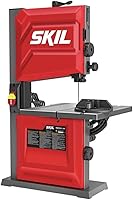
The SKIL suits woodworkers shaping smaller furniture parts and irregular blanks. Its 2.8-amp induction motor and 2-speed drive system serve woodworking cuts, while a miter gauge helps guide crosscuts.
Skip this model if your main goal is enclosed fretwork. Also confirm its maximum cutting height before buying it for a specific resaw job; the 9-inch model name is not a resaw-height measurement.
Our benchtop band saw guide helps you compare alternatives if your planned boards call for a different capacity.
Choose the WEN for fine patterns
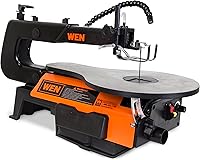
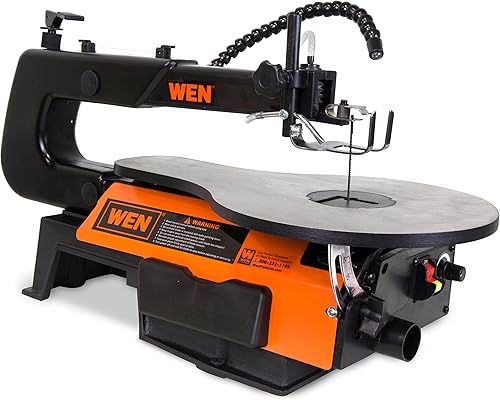
The WEN suits ornament makers, puzzle makers and beginners learning fretwork. Its variable speed reaches 1,600 strokes per minute, and its thumb screw adapter supports tool-free blade changes.
Skip it if your regular task is thinning boards or preparing thick furniture blanks. For more project examples, see what a scroll saw is used for.
Compare other options in our best scroll saw guide if blade handling and repeated interior cuts will drive your choice.
What cuts can each saw make?
A band saw handles sweeping curves, rips and suitable resawing jobs; a scroll saw handles tight turns and enclosed patterns. Match the blade to the cut before deciding how fast to feed the wood.
For example, cutting the outside profile of a wooden animal could suit either tool. Cutting a small opening inside that animal without crossing its outer edge calls for the scroll saw.
For a sharp corner, avoid twisting the wood against the blade. Use relief cuts from waste edges where appropriate, or follow the blade maker's method for turning within a pattern.
On either machine, trying to force a tighter turn than the blade can make causes trouble. Change the blade or cut plan instead of adding pressure.
Can a band saw cut interior shapes?
A standard band saw setup cannot thread its blade through an enclosed opening. A drilled starter hole doesn't solve that limit because the blade is an intact loop.
Choose a scroll saw when a design has many separate openings. Each opening means another blade release and reconnection, so consider that workflow before choosing a complex first project.
Can a scroll saw cut thick wood?
The WEN can cut wood up to 2 inches thick, but fine patterns become harder as thickness increases. A cut that fits beneath the upper assembly can still demand a slower feed and a different blade.
Thicker material makes it harder to keep the blade square through tight turns. Practice on scrap of the same species and thickness before cutting a part with narrow bridges or fragile details.
How do throat depth and cutting height affect your choice?
Throat depth limits reach; cutting height limits stock thickness or height. Check both against the actual cut, rather than comparing the numbers in the model names.
The WEN has a 16-inch throat in its standard blade position. That measures the distance from the blade to the rear frame, which can restrict how you rotate a wide pattern.
Its holder also accepts the blade turned 90 degrees. This changes the feed direction for longer cuts, but the work still needs support and a clear path past the machine.
For resawing on a band saw, measure the board dimension that will stand upright beneath the upper guide. Check suitable blade options too, since physical clearance alone doesn't make a machine a good fit for sustained resawing.
Which blade details matter before you buy?
Check blade compatibility and availability before choosing accessories. The blade determines turning ability, chip clearance and much of the cut quality.
On a band saw, narrower blades generally suit tighter curves, while wider blades suit straighter work within the machine's allowed range. Buy the exact blade length and permitted width for your model.
The WEN accepts pinned and pinless blades. Pinless blades are useful for fine interior work because they can pass through smaller entry holes without end pins getting in the way.
Tooth spacing matters too: fine teeth suit delicate work, while thicker stock needs enough space to clear chips. Follow blade guidance for the material rather than assuming the finest blade leaves the best result.
What setup does each saw need?
A band saw needs correct tension, tracking and guide adjustment; a scroll saw needs a correctly fitted blade, suitable tension and a properly set hold-down. Disconnect power before blade changes and adjustments.
On the SKIL, the quick blade tension setting, ball bearing and lower blade guides, and tracking sight window help with setup. Belt tension is a separate adjustment from blade tension.
Set the upper band saw guide close above the work as directed in the manual. Check table squareness with a suitable square before cutting parts that must fit together.
For the WEN, check blade direction and seating before tensioning it. Adjust the hold-down as directed so the wood stays supported without becoming hard to steer.
Start with a simple practice cut and check the result before following a detailed pattern. Our band saw tuning guide and beginner's scroll saw guide cover the next steps.
What bench space and dust collection do they need?
Both saws need a stable mounting surface and clear space for the workpiece. Measure the working area, not just the machine's footprint.
The SKIL measures 24.02 inches long by 15.16 inches wide overall. The WEN measures 26.38 inches long by 13 inches wide, making it longer but narrower.
Use a cardboard outline to plan the bench, then move a typical workpiece through its full cut path. Include space for your stance, controls, hose bends and support for longer stock.
The SKIL accepts a standard 2 ½-inch vacuum hose; the WEN has a 1 ½-inch dust port. Check hose and adapter compatibility before arranging extraction.
The WEN also has an air pump to clear the cut line. A blower improves visibility but moves dust rather than collecting it.
Our small-shop dust collector guide helps with extraction planning. For the whole bench layout, use our benchtop workshop machine guide.
What mistakes cause poor cuts?
Forcing the feed and using the wrong blade cause many avoidable problems. A fresh, suitable blade and a steady pace help more than pushing harder.
On a band saw, don't twist the stock to force a straight cut back onto the line. Stop and check blade condition, tension, tracking and guides before making another attempt.
For resawing, start with stable stock and a clear reference face. Support the board so it cannot rock, and keep hands clear of the blade's exit path.
On a scroll saw, pushing too quickly can bend the blade and leave the underside off line. Slow down, especially in thicker stock, and turn without heavy sideways pressure.
Plan the cutting order for delicate patterns. Cutting enclosed details while the surrounding blank is still intact often gives you more material to hold and support.
Don't clear scraps beside a moving blade. Stop the machine, wait for the blade to stop, and disconnect power before reaching into the blade area.
How do you care for each saw?
Keep the table, blade area and dust passages clean, and inspect the blade before each session. Disconnect power before cleaning or maintenance.
On a band saw, check guides and accessible wheel surfaces for dust buildup according to the manual. Recheck the setup after changing blades rather than assuming the old adjustments still fit.
On a scroll saw, keep blade clamps clean and inspect the blade ends for damage. Replace a blade that becomes dull, kinked or difficult to control.
Store spare blades so their size and tooth pattern remain easy to identify. Follow the manual for lubrication and storage tension; don't apply oil to belts or blade clamps unless directed.
What should you budget for besides the saw?
Plan for blades, extraction connections and secure mounting, not just the machine. These needs vary with your projects and what your shop already has.
The SKIL includes a blade, table, miter gauge and dust port. The WEN includes 3 blades, a work light, an air pump and onboard storage.
You may still need different blades, hose adapters or stock supports. Scroll saw patterns with enclosed openings also require a way to drill entry holes.
Both saws use corded electric power. Position cords and hoses so they stay clear of the stock and don't pull against the machine.
Which is safer for a beginner?
Choose a cut you can control with your hands clear of the blade. Neither saw's blade size makes careless feeding or unstable stock safe.
Secure the machine as directed, wear eye protection, and keep guards in place. Avoid gloves, loose clothing and jewelry around moving blades, and tie back long hair.
Small parts and round stock need particular care because they can be hard to control. Use suitable fixtures or another cutting method when you cannot maintain stable support.
Learn the stop control before starting a cut. If the blade binds or the work shifts, stop rather than reaching toward the blade to recover the piece.
Band saw vs scroll saw: which one should you buy first?
Settle the band saw vs scroll saw choice by checking the hardest cut in your next project. Pick the SKIL for broad profiles and suitable stock preparation after confirming capacity; pick the WEN when enclosed openings and fine details define the work.
If both seem useful, buy for the task you repeat most and leave space for the second machine later. Continue with our scroll and band saw guide to narrow the options around that task.
Frequently asked questions
Can a band saw replace a scroll saw?
A band saw can replace a scroll saw for some broad curves, but not for enclosed fretwork; its continuous loop blade cannot be detached and threaded through a small entry hole. Choose a scroll saw when your patterns have openings that must stay separate from the outside edge.
Can a scroll saw resaw boards?
A scroll saw is the wrong choice for routine resawing; dividing a board through its thickness calls for a suitable band saw with enough cutting height, a suitable blade and steady stock support. A scroll saw's fine blade is better suited to detailed shapes than sustained cuts through board height.
Which saw is better for a small shop?
Choose the saw that handles your regular projects and leaves enough working room around the bench; a scroll saw needs room to rotate patterns, while a band saw needs clear feed space and support for longer stock. Measure the workpiece path as well as the machine before arranging your shop.
Which saw should a beginner buy first?
Buy a band saw first for curved furniture parts and suitable resawing jobs, or a scroll saw for ornaments, puzzles and interior patterns; start with simple cuts in scrap before moving to finished parts. Our guide to using a scroll saw explains the workflow for detailed projects.