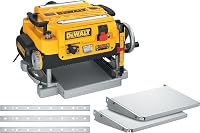
WEN PL1326 vs DeWalt DW735: Which Planer? (October 2026)
Choose the WEN PL1326 if you prefer rotatable blades for routine cutterhead care. Choose the DeWalt DW735 if you want separate feed settings for dimensioning and finishing, plus fan-assisted chip ejection.
On this page (13 sections)
- WEN PL1326 vs DeWalt DW735: what is the main difference?
- Which cutterhead suits your work?
- Who should buy the WEN, and who should skip it?
- Who should buy the DeWalt, and who should skip it?
- Does the Craftsman CMEW320 make sense instead?
- How do you choose capacity and workspace?
- How should you set up the planer before its first pass?
- How do the WEN and DeWalt handle chips?
- Which planer helps limit snipe?
- How do you get matching boards without removing too much wood?
- Which common mistakes should you avoid?
- What care keeps a planer cutting well?
- WEN PL1326 vs DeWalt DW735: which should you choose?
Choose the WEN PL1326 if you want rotatable blades and a simple feed setup for home furniture work. Choose the DeWalt DW735 if you regularly size batches of lumber and want a separate feed setting for final passes.
The Craftsman CMEW320 is worth considering for narrower project parts. Its smaller cutting capacity matters most if you plan to plane wide boards or assembled panels.
Your choice should start with the wood you use, the blade care you're willing to do and the space available for feeding boards.


WEN PL1326 vs DeWalt DW735: what is the main difference?
The main difference is cutterhead care versus feed control. The WEN uses staggered, rotatable blades, while the DeWalt lets you change how closely its knife cuts fall along the board.
Both main choices have a 13-inch cutting width and a 15-amp motor. Those shared specs make board capacity a tie, so focus on how each machine fits your work.
The WEN's single feed rate keeps the process simple: set the cut depth, support the stock and make the pass. The DeWalt gives you another choice when moving from rough sizing to surface preparation.
Neither machine replaces sanding or careful lumber selection. Grain changes, knots and dull cutting edges can leave marks that require more work after planing.
Which cutterhead suits your work?
Choose the WEN for rotatable cutting edges or the DeWalt for a three-knife system with feed choices. Think through maintenance before buying, since every planer eventually needs cutting-edge care.
What does the WEN PL1326 spiral cutterhead offer?
The WEN PL1326 has 26 staggered, rotatable HSS blades and feeds stock at 26 feet per minute. It suits buyers who prefer that blade arrangement and don't need a separate finishing speed.
HSS means high-speed steel; don't confuse these blades with carbide inserts. Buy replacement blades made for this cutterhead, with WEN BP510H identified as a compatible option.
Rotation must follow the manual's procedure. Disconnect power before opening the machine, and use the required tools and tightening method rather than guessing at blade position.
What does the DeWalt three-knife head offer?
The DeWalt uses 3 knives with a cutterhead speed of 10,000 rpm. Its feed settings produce 96 or 179 cuts per inch, with DeWalt recommending the lower setting for sizing and the higher setting for a finer finish.
More cuts per inch place cutting marks closer together. That is useful on final passes, but sharp knives and shallow cuts still matter on wood with changing grain.
The included blade-change T-wrench supports routine knife changes. Check the required knife type and change procedure before adding replacement parts to your shop supplies.
Who should buy the WEN, and who should skip it?
The WEN suits home furniture builders who want to bring boards and project parts to a shared thickness. It makes sense when rotatable blades matter more than changing feed speed.
A material removal gauge helps you judge each pass, and a depth stop helps you return to a chosen thickness. These controls are useful when preparing several rails, shelves or frame parts that must match.
Its maximum stock thickness is 6 inches. Measure rough lumber at its thickest point, then check the manual's other stock limits before planning a job around that opening.
Skip the WEN if separate roughing and finishing feed settings are central to your workflow. Also plan its location before buying: at 36.74 kg, it needs more thought than a tool you casually lift onto a shelf.
Who should buy the DeWalt, and who should skip it?
The DeWalt suits frequent batch work where you want to separate stock removal from final surface passes. Its feed selection gives you a clear way to change between those stages.
Its material removal gauge helps set a pass, while the large thickness scale and turret depth stop help you return to common dimensions. Measure the actual board too, especially before the last cut.
Fan-assisted chip ejection and an automatic carriage lock are useful reasons to choose it beyond the feed settings. They address chip movement and carriage movement, two parts of the process that need attention during repeated work.
Skip it if your main reason for shopping is an individually rotatable blade system. If you only plane occasional narrow parts, decide whether you will use the extra controls often enough to make them a priority.
Does the Craftsman CMEW320 make sense instead?
Choose the Craftsman for narrow stock projects when its capacity covers your planned work. Skip it if wide boards or large glue-ups are a regular part of your builds.
Its 12.25-inch cutting width leaves less room than either main choice. Check the rough board width, including any uneven edges, rather than measuring only the finished part you hope to make.
The two-knife solid steel cutterhead uses high-carbon steel, double-edged, reversible knives. That gives you another edge to use when the first needs attention, following the knife-change instructions.
A vacuum port provides a collection connection, and the machine weighs 27.71 kg. It still needs a secure work surface and a sensible lifting plan.
For more alternatives, compare the best thickness planers. If your lumber is twisted or bowed, read our planer vs jointer guide before choosing your first machine.
How do you choose capacity and workspace?
Choose around your widest rough board and longest planned workpiece. A planer that fits on a bench can still be awkward to use if the board path runs into a wall or cabinet.
Think beyond individual boards. A glue-up may fit before trimming, but squeeze-out and uneven joints need attention before it goes near the cutterhead.
Check minimum stock length and thickness in the manual. Never feed short offcuts or very thin pieces just because they fit through the opening.
Allow room on both sides for the full board length, plus space to stand and support it safely. A clear feed path matters more than squeezing the machine into an unused corner.
If you're still deciding which features deserve space in your shop, read how to choose a thickness planer. Start with actual projects rather than the largest capacity you can find.
How should you set up the planer before its first pass?
Begin with a secure base, aligned supports and connected chip collection. Read the operating instructions before adjusting tables, opening guards or feeding stock.
The WEN has predrilled mounting holes for securing it to a work surface or stand. Its cast iron base adds weight, but mounting remains part of a stable setup.
Check that infeed and outfeed support follow the board's travel without pushing it upward. Roller stands set too high can lift a board as it enters or leaves the cutterhead.
Plan power and hose routes so neither crosses your feet or catches the stock. Follow the electrical instructions for the machine and collection equipment, including any limits on extension cords.
Before the first cut, inspect the wood for metal, grit, loose knots and damage. Reclaimed lumber needs particular care because hidden debris can damage cutting edges and create a hazard.
Use eye and hearing protection, keep loose clothing clear and stay out of the board's direct path. Our thickness planer use guide explains the basic feeding sequence.
How do the WEN and DeWalt handle chips?
Choose the DeWalt if active chip ejection is a priority. Its fan moves chips away from the cutterhead and out through the exhaust, and a dust hose adapter is included.
The WEN's adjustable dust port lets you position the connection for your setup. Route the hose with room to move and without pulling hard on the port.
A chip-ejection fan moves debris; you still need somewhere suitable to collect it. Check hose fit, collection capacity and the machine's connection instructions before starting.
Planers make bulky shavings that can fill a small container quickly. Empty it before it overfills, and inspect hoses for restrictions when chips start building up around the work.
For help matching collection equipment to your space, see our small-shop dust collector guide. Our best thickness planers guide also compares other machine options.
Which planer helps limit snipe?
Both main choices include features aimed at reducing snipe, but board support remains essential. Snipe is a deeper cut near a board's end, often linked to changes in support or movement.
DeWalt says its automatic carriage lock reduces movement that causes snipe. WEN says its height-adjustable infeed and outfeed tables help limit it while supporting the stock.
Support long boards as they approach and leave the machine without lifting them against the cutterhead. Let the feed system move the stock rather than pulling it through.
Leave extra length on project boards when practical, then trim after planing. That gives you room to remove end damage without losing the finished length.
Follow our planer snipe guide for support and table checks. Make one adjustment at a time so you can see which change helps.
How do you get matching boards without removing too much wood?
Work toward a measured target thickness in small steps. Use the machine's gauge to plan each pass, then measure the board rather than relying only on the scale.
Start with a flat reference face. Feed rollers can press a bowed board down during a cut, allowing it to spring back afterward instead of becoming flat.
Sort parts by starting thickness and mark their target size. Bring the thicker pieces down gradually, then use the same final setting across the batch for a closer match.
Take lighter cuts as you approach the target, especially on wide boards or difficult grain. A maximum cut allowance is a limit, not the right depth for every pass.
Inspect the surface between passes for torn fibers or repeating ridges. Change grain direction when appropriate and allowed by the instructions, and stop to inspect cutting edges if defects persist.
Save final length cuts for after thickness work when the project allows it. You gain trimming room and avoid sending small finished parts through the planer.
Which common mistakes should you avoid?
Avoid deep cuts, unsupported stock and treating a planer as a jointer. These mistakes waste wood even when the machine has useful gauges and controls.
- Chasing a tear-out mark too far: decide whether sanding or a different surface-prep method makes more sense before removing more thickness.
- Ignoring grain changes: inspect both faces and expect knots or reversing grain to need lighter passes.
- Pulling on the outfeed end: support the board without fighting the feed rollers or changing its angle.
- Feeding dirty lumber: remove surface grit and inspect for embedded metal before planing.
- Clearing chips while connected to power: shut down, disconnect power and wait for all motion to stop before clearing a blockage.
- Buying only for motor speed: feed control, stock support and cutting-edge condition are more useful decision points here.
A planer makes the upper face parallel to the face beneath it; it doesn't automatically remove twist. Prepare a sound reference face with the right method before expecting accurate, flat parts.
What care keeps a planer cutting well?
Keep the bed clean, chip path clear and cutting edges in good condition. Disconnect power before cleaning or opening any part of the machine.
Remove loose chips with suitable cleaning tools, keeping fingers away from cutting edges. Follow the manual for bed care and approved cleaners, since residue can interfere with feeding.
Inspect knives or blades when you see repeated ridges, torn surfaces or increased cutting effort. Don't compensate for a damaged edge by repeatedly taking more wood off a project part.
Check fasteners, supports and hose connections as part of routine upkeep. Store the machine where damp conditions won't encourage corrosion on exposed metal.
WEN PL1326 vs DeWalt DW735: which should you choose?
Pick the WEN PL1326 for home projects where rotatable blades and a simple feed routine fit your work. Pick the DeWalt DW735 for repeated batches where you will use separate sizing and finishing settings.
Choose the Craftsman when your rough stock fits its narrower opening and reversible knives meet your maintenance needs. Skip any of these if your planned boards exceed its stock limits or you can't provide safe feeding space.
Before ordering, write down your widest board, typical board length, collection plan and preferred blade-care method. Those 4 checks give you a firmer decision than comparing motor numbers alone.
For a broader view of preparing rough lumber, continue with our planer and jointer guide.
Frequently asked questions
Is the WEN PL1326 better than the DeWalt DW735?
Choose the WEN PL1326 if rotatable blades suit your maintenance plans; choose the DeWalt DW735 if separate sizing and finishing feed settings matter more. The WEN fits home furniture work well, while the DeWalt offers more feed control for repeated batches of boards.
Does the WEN PL1326 have a wider capacity than the DW735?
No, both have a 13-inch cutting width, so neither gives you more room across a board; the WEN accepts stock up to 6 inches thick. Check the manual's minimum stock length and thickness as well, especially if you plan to make small parts or thin strips.
What is the difference between a spiral and three-knife planer?
The WEN has staggered, rotatable HSS blades arranged around its cutterhead, while the DeWalt uses 3 knives; that changes the blade-care process. For either design, sharp edges, shallow passes and suitable grain direction matter when you want to reduce torn fibers and prepare wood for sanding.
Which planer has better chip collection?
The DeWalt offers active chip ejection through a fan, making it the stronger choice if powered chip removal is a priority; the WEN has an adjustable dust port, and the Craftsman has a vacuum port. Each still needs a suitable collection setup to keep chips contained.
Which planer helps reduce snipe?
The DeWalt addresses carriage movement with an automatic lock, while the WEN includes height-adjustable infeed and outfeed tables for board support; both approaches help address causes of snipe. You still need aligned supports and enough extra board length to trim away end defects when necessary.