7 Best Benchtop Jointers (October 2026)
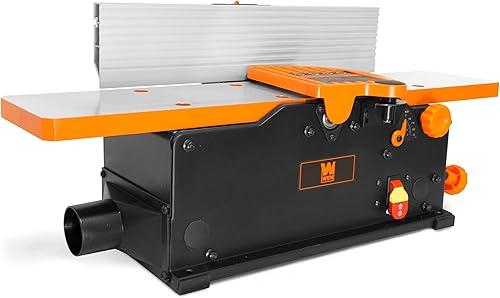
The best benchtop jointers include the WEN JT630H 6-Inch Spiral Jointer for small home shops, the WEN JT3062 6-Inch Two-Blade Jointer for occasional edge jointing, and the WEN JT833H 8-Inch Spiral Jointer for wider project boards.
On this page (9 sections)
- How we chose the best benchtop jointers
- Compare benchtop jointers by capacity and upkeep
- Which benchtop jointer fits your shop?
- Should you buy a 6-inch or 8-inch jointer?
- Which cutterhead is easier to maintain?
- How should you set up a benchtop jointer?
- How do you get a flat face and a square edge?
- Which mistakes waste wood or spoil the cut?
- Which best benchtop jointer should you buy?
The WEN JT630H 6-Inch Spiral Jointer is the best benchtop jointer for most small shops that work with narrower boards. Choose the WEN JT833H when wider stock is routine, or the Cutech 40180HI when a dedicated station and longer fence suit your workflow.
A jointer creates one flat face and an edge square to it. Those reference surfaces help the planer, saw and later joinery steps produce parts that fit together.
Start with your lumber, rather than motor claims or the number of cutters. Board width determines whether a machine can flatten the face, while bed support and fence setup affect how well you can guide it.
For room planning, see our guide to benchtop workshop machines for a home shop. Read what a jointer is used for for its basic jobs, then use our thickness planer guide to plan the next milling step.
Our picks at a glance
-
1
-
2
Best for occasional edge jointing
WEN JT3062 6-Inch Two-Blade Jointer
8.4/10 our score
See it on Amazon -
3

- 4
 Check it
Cutech 40180HI 8-Inch Spiral Jointer
Best for permanent bench setups - 5
 Check it
Cutech 40160HB 6-Inch Spiral Jointer
Best for compact carbide setups - 6
 Check it
Craftsman CMEW020 Benchtop Jointer
Best for varied wood projects - 7
 Best for frequent storageCheck it
How we chose the best benchtop jointers
Capacity, workpiece support and cutter maintenance drive our choices. We compared cutting widths, table layouts, fence features and service needs to identify a useful match for each shop routine.
The top pick favors a common small-shop workload: flattening narrower boards and preparing edges without dedicating space to a larger machine. Wider models become better buys when their extra capacity saves you from changing the boards or projects you use.
We also considered how each machine fits between work sessions. A heavy jointer can suit a permanent station, while a lighter model makes more sense when the bench has to serve several tools.
No cutterhead design removes the need for careful setup. Table alignment, a square fence and sound feeding technique matter more than a feature name when you're trying to produce a straight edge.
Compare benchtop jointers by capacity and upkeep
Choose cutting width first, then compare support and cutter service. The two wider models solve a capacity problem; the smaller options offer different ways to balance storage, knife maintenance and table design.
Use the table to narrow your choices, then read the individual sections for the tradeoffs. Motor speed and cuts per minute describe different things, so don't treat the largest number as a finish-quality ranking.
| Product | Best for | Cutting width | Cutterhead | Table | Our score |
|---|---|---|---|---|---|
| WEN JT630H 6-Inch Spiral Jointer | small home shops | 6 in | 12 staggered HSS blades | 30 x 6 in | 8.9 |
| WEN JT3062 6-Inch Two-Blade Jointer | occasional edge jointing | 6 in | Two blades | 30 x 6-3/16 in | 8.4 |
| WEN JT833H 8-Inch Spiral Jointer | wider project boards | 8 in | 16 staggered HSS blades | 33 x 8 in; support arms extend to 51 in | 8.2 |
| Cutech 40180HI 8-Inch Spiral Jointer | permanent bench setups | 8 in | 16 two-sided carbide inserts | 8.1 | |
| Cutech 40160HB 6-Inch Spiral Jointer | compact carbide setups | 6 in | 12 two-sided tungsten carbide inserts | 8.0 | |
| Craftsman CMEW020 Benchtop Jointer | varied wood projects | Two knives | 7.7 | ||
| VEVOR 6-Inch Benchtop Jointer | frequent storage | 6 in | Two HSS blades | 6 x 23 in | 6.8 |
Which benchtop jointer fits your shop?
The WEN JT630H fits the broadest range of smaller-shop needs, but your stock and storage routine can point elsewhere. Each alternative below has a clear reason to choose it and a reason to pass.
WEN JT630H: best benchtop jointer for small shops
WEN JT630H 6-Inch Spiral Jointer: Best for small home shops
- 6-inch cutting width
- 12 staggered HSS blades
- 30 x 6 in table
- Fence bevels up to 45 degrees
A balanced choice for small shops that mill narrower stock and want a spiral cutterhead without moving to an 8-inch machine.
Pros
- 12 staggered HSS blades
- Includes two push blocks
- Depth scale for cut adjustments
Cons
- Cannot face-joint boards wider than 6 in
- Short bed requires care with longer stock
Buy the JT630H if you mainly mill manageable project parts and want a spiral head in a compact setup. Its 12 staggered HSS blades cut across a 6-inch width, with a 30 x 6-inch table supporting the work.
The depth scale helps you return to a shallow setting between jobs. Although adjustment reaches 1/8 inch, small cuts are a better starting point for learning how the board responds.
WEN includes two push blocks and a 2-1/2-inch dust port. The fence bevels up to 45 degrees, but square edge work should start with a separate square check after tightening its lock.
Skip this model if broad boards are a normal part of your lumber pile. Buying within your usual stock width is more useful than repeatedly finding ways around a machine that's too narrow.
After establishing a flat face, follow our guide to using a thickness planer to bring the opposite face parallel.
WEN JT3062: for occasional edge preparation
WEN JT3062 6-Inch Two-Blade Jointer: Best for occasional edge jointing
- 6-inch cutting width
- Two-blade cutterhead
- 30 x 6-3/16 in table
- Includes two push blocks
A conventional two-blade choice for occasional milling and edge preparation, with push blocks and a depth scale included.
Pros
- Depth adjusts from 0 to 1/8 in
- Fence bevels up to 45 degrees
- WEN backs it with a two-year warranty
Cons
- Cannot face-joint boards wider than 6 in
- Replacement knives require careful alignment
Choose the JT3062 if you want a conventional two-blade machine for occasional board preparation and glue-up edges. Its 30 x 6-3/16-inch table provides a similar support length to the top pick, while cutting capacity remains 6 inches.
This is a sensible alternative for someone already comfortable with straight-knife maintenance. Read the replacement procedure before buying so the alignment work fits your skills and available time.
The machine includes a depth scale, two push blocks and a 2-1/2-inch dust port. WEN backs it with a two-year warranty.
Its table being slightly wider than the nominal cut doesn't let you face-joint wider stock. Keep that distinction in mind when measuring boards for a project.
Skip it if your main reason for changing machines is to move away from long knives. The JT630H is the more direct fit for that preference, while an 8-inch option solves a different problem: board capacity.
WEN JT833H: for wider boards
WEN JT833H 8-Inch Spiral Jointer: Best for wider project boards
- 8-inch cutting width
- 16 staggered HSS blades
- 33 x 8 in table
- Support arms extend to 51 in
The practical step up for shops that regularly face-joint wider boards and have room to use the support extensions.
Pros
- 8-inch cutting width
- Extendable workpiece support
- Includes 2-1/2-inch and 4-inch dust ports
Cons
- Extended supports need clear bench space
- Support arms do not form a continuous table
Buy the JT833H when boards wider than a smaller jointer can handle show up regularly in your projects. Its 8-inch cutting width helps preserve a broad board rather than forcing a width change just to fit the machine.
The spiral cutterhead uses 16 staggered HSS blades. A 33 x 8-inch table works with support arms that extend the support span to 51 inches.
Those arms give longer workpieces additional support points, but they aren't a continuous precision table. Set them as directed so they don't lift the board or change its path through the cut.
WEN includes two push blocks and both 2-1/2-inch and 4-inch dust ports. That gives you connection options to consider when planning extraction.
Skip this model if most of your work is short, narrow stock and storage space is scarce. Buy it for capacity you expect to use, and leave clear feeding space beyond the extended supports.
Cutech 40180HI: for a dedicated station
Cutech 40180HI 8-Inch Spiral Jointer: Best for permanent bench setups
- 8-inch cutting width
- 16 two-sided carbide inserts
- 24-inch aluminum fence
- 54-inch working length with extensions
A better match for a dedicated station than frequent storage, with cast iron tables, a long supported fence and table extensions.
Pros
- Cast iron tables
- Fence support brackets
- Two-sided carbide inserts
Cons
- 82.8 lb weight complicates frequent moves
- Full support span needs dedicated space
Choose the 40180HI if the jointer will stay on a dedicated bench and you want cast iron tables with a longer fence. Its 24-inch aluminum fence has support brackets at both ends, giving you a supported reference for edge work.
The cutterhead carries 16 two-sided carbide inserts, and the extensions bring total working length to 54 inches. This combines wider-board capacity with more spread-out support for feeding stock.
The main practical cost is handling: the machine weighs 82.8 lb. Plan its location and bench support before moving it into place, rather than expecting to lift it onto a shelf after every job.
Its guide-post and support-rod features are relevant to table movement and frame support. You should still check alignment after assembly and verify the fence before milling project parts.
Skip it if your workbench must be cleared often. The smaller Cutech better suits a narrower-stock workflow, while the VEVOR places much less weight between storage and the bench.
Cutech 40160HB: for a compact carbide setup
Cutech 40160HB 6-Inch Spiral Jointer: Best for compact carbide setups
- 6-inch spiral cutterhead
- 12 two-sided carbide inserts
- Teflon-coated aluminum tables
- 19-5/8-inch fence
Choose this compact Cutech for two-sided carbide inserts and coated aluminum tables when your stock fits a smaller machine.
Pros
- Indexable carbide inserts
- Depth pointer and scale
- Fence quick stops at 90 and 135 degrees
Cons
- Cannot face-joint boards wider than 6 in
- Table coating needs suitable cleaning products
Choose the 40160HB when you want two-sided carbide inserts without moving to a wider machine. Its 12 inserts give you a different maintenance route from the HSS cutters on the smaller WEN spiral model.
The total bed length is 30 inches, and the aluminum tables have a Teflon coating. Use cleaning products and surface treatments approved for that coating rather than treating it like bare cast iron.
A depth pointer helps set the cut, while the 19-5/8-inch fence has quick stops at 90 and 135 degrees. Check a stop with your square before relying on it for a batch of parts.
This Cutech fits small-project milling when insert service matters more to you than extra cutting width. Check the correct replacement insert and fastening procedure before buying spares.
Skip it if your next projects already require wider face jointing. Carbide cutters change the upkeep, but they don't expand the machine's capacity or remove the support limits of a short bed.
Craftsman CMEW020: for material-based speed adjustment
Craftsman CMEW020 Benchtop Jointer: Best for varied wood projects
- Variable speed from 6,000 to 11,000 RPM
- Two-knife cutterhead
- 10-amp motor
- Center-mounted fence
Variable cutter speed suits woodworkers who want another adjustment for different materials and are comfortable setting straight knives.
Pros
- Adjustable cutter speed
- Jackscrew knife-leveling arrangement
- Built-in cutterhead lock for knife service
Cons
- Knife alignment is part of maintenance
- Confirm cutting capacity before choosing it for face jointing
Choose the CMEW020 if you want to adjust cutter speed for different work rather than use a fixed-speed machine. Its 6,000 to 11,000 RPM range gives you that control alongside a two-knife cutterhead.
Use the manual's guidance to choose settings for your stock. Speed adjustment works alongside cut depth and feed technique; it doesn't replace sharp knives or a secure grip.
The knife setup includes jackscrew leveling and a built-in cutterhead lock for service. Those features suit a buyer willing to learn the knife-setting process and check alignment after replacement.
The center-mounted fence supports edge jointing. Confirm the machine's actual cutting capacity before ordering for face work, since its 4-1/4-inch fence measurement isn't a reliable cutting-width guide.
Skip this model if your priority is small indexable cutters. Choose it for speed control and its knife-adjustment arrangement, and allow time for careful setup rather than treating another control as a shortcut to better edges.
VEVOR 6-Inch: for putting away after each session
VEVOR 6-Inch Benchtop Jointer: Best for frequent storage
- 6-inch cutting width
- Two HSS blades
- 6 x 23 in table
- 21.2 lb weight
A light, short-table option for small workpieces when putting the machine away after each session is a priority.
Pros
- 21.2 lb weight
- Compact table footprint
- Includes a dust port
Cons
- Short bed limits support for longer stock
- Needs secure mounting despite its light weight
Choose the VEVOR when carrying and storing the machine is a major part of your routine. At 21.2 lb, it is easier to plan around frequent moves than the heavier models with stated weights here.
The tradeoff is its 6 x 23-inch table. That short bed suits smaller workpieces better than long boards that need substantial support before and after the cutter.
Its straight cutterhead uses two HSS blades, and the fence adjusts through plus or minus 45 degrees. A dust port is included, but compatible vacuum equipment is separate.
Don't let low weight lead to casual mounting. Secure the machine to a suitable surface as directed before feeding stock, and route the hose so it doesn't pull on the tool.
Skip this option if long-board straightening is your main job. Its appeal is compact storage, and a larger table is the more useful feature when controlling longer lumber matters most.
Should you buy a 6-inch or 8-inch jointer?
Buy for the boards you routinely face-joint, with some allowance for projects you already plan to build. An occasional wide board is a weaker reason to expand your setup than a lumber pile full of stock your machine cannot accept.
Measure board faces, not just the narrow edges you intend to square. Cutting width limits face jointing, while edge work also depends on fence support, workpiece size and the manual's limits.
Don't confuse table width with cutter capacity. A little extra surface beside the cutter doesn't increase the width you can safely flatten.
Length deserves a separate decision. A wider cutter won't straighten a long board by itself if the bed and workpiece support make that board hard to control.
For long furniture parts, assess the full feed path as well as the machine footprint. You need room for the board to enter and leave without striking a wall, shelf or another tool.
If most parts are already surfaced and only need a clean edge, a smaller jointer may be enough. If rough, wide lumber drives your projects, capacity should take priority over easy storage.
Which cutterhead is easier to maintain?
Choose the cutter system you're prepared to service correctly. Straight knives need accurate alignment, while small cutters require the correct replacement parts, clean seats and proper fastening.
HSS blades and carbide inserts are different choices
HSS means high-speed steel, and it appears here in both straight-knife and staggered-cutter designs. Carbide is the cutter material on the Cutech models, rather than another word for a spiral arrangement.
Indexable two-sided inserts let you turn to another usable edge when the instructions allow it. Don't assume that every small cutter can be rotated, or that similar-looking replacements fit.
A damaged small insert can often be addressed locally instead of replacing a full-length knife. The exact procedure depends on the cutterhead, so use the manual and specified parts.
Plan service before you need it
Check replacement-part availability and read the service steps before committing to a model. A machine isn't convenient if you keep postponing dull-cutter maintenance because the procedure doesn't suit you.
Unplug the jointer before cutter work and use the required tools. Clean debris from the cutter seat and follow the specified torque and alignment instructions rather than tightening by feel.
Persistent ridges, tearout or poor feeding call for inspection. Increasing cut depth to force a dull or damaged cutter through the job usually adds strain and removes more wood than needed.
How should you set up a benchtop jointer?
Secure the machine, check its reference surfaces and connect extraction before milling project parts. Assembly is only the start; verify the setup after transport and whenever the fence or cutters have been disturbed.
Build a stable working position
Use a bench or stand that can carry the jointer and workpiece without rocking. Set a working height that lets you guide stock without reaching awkwardly across the cutter area.
Follow the mounting instructions, and keep the switch accessible. Arrange the cord and hose away from the feed path and your feet.
A small footprint doesn't mean the jointer can operate in a crowded corner. Check the whole travel of your longest planned board before switching on.
Check the fence and tables
With power disconnected, use a reliable square to set the fence for square edges. Tighten the lock, then check again because tightening can shift an adjustment.
Follow the manual's procedure for checking table alignment and the relationship between the cutters and outfeed table. Avoid changing factory adjustments at random when a poor result may come from the fence or feeding technique.
Set extensions or outside supports so they assist the board without lifting it. A support that changes the board's angle can spoil the reference surface you're trying to create.
Arrange dust and chip removal
Match hose fittings to the machine and use extraction suited to its instructions. An included port is a connection point, not a collection system.
Our guide to dust collectors for a small shop can help you plan around limited room. Clear a blockage only after switching off, unplugging and waiting for the cutterhead to stop.
How do you get a flat face and a square edge?
Flatten one face first, then hold that face against the fence to square an edge. This creates a pair of reference surfaces for later milling.
Inspect the board for metal, loose knots, splits and damage before cutting. Reject stock that cannot be guided safely within the machine's minimum size and condition limits.
Check how the rough face sits on a flat surface. A badly twisted board may rock, and pushing it flat can make it spring back after the cut rather than stay flat.
Choose a stable starting orientation under the manual's guidance. If the board can't sit and feed safely, use another preparation method or a more suitable machine.
Start with shallow passes and the recommended push blocks. Keep the guard working, keep your hands out of the cutter path and never joint end grain on these machines.
As the newly cut surface reaches the outfeed table, transfer guiding pressure onto that established surface. Avoid heavy downward pressure that bends the board or follows its original hollow.
Check progress with a straightedge across the length and width. Stop face jointing when you have a flat reference rather than continuing until the board reaches a target thickness.
Place that face against the fence for edge jointing, then check the edge for straightness and square. Mark the reference face and edge so you can keep using them during the next steps.
A planer brings the opposite face parallel and reduces thickness. Compare our best thickness planer picks if you're building a complete rough-lumber workflow.
Which mistakes waste wood or spoil the cut?
Deep cuts, excess pressure and poor references cause more trouble than slow progress. Diagnose the shape of the board and the machine setup before taking another pass.
- Chasing thickness on the jointer: Stop once the reference surface is flat. Use the planer for parallel faces and final thickness.
- Pressing a bowed board flat: The wood can spring back after passing the cutter. Guide it without forcing away its shape.
- Trusting the fence stop without checking: Verify square after locking the fence, especially after bevel work or storage.
- Using extensions as a cure for every long board: Added support helps handling, but it doesn't turn a short bed into a long precision reference.
- Removing more than the defect requires: Mark the surface with pencil lines and inspect between passes so you can see where material remains.
- Ignoring changing grain: If tearout appears, stop and reassess feed direction and cut depth under the machine's instructions.
- Feeding undersized scraps: Follow minimum dimensions. Small offcuts aren't worth bringing hands close to the cutter.
Keep the tables clean so pitch and packed chips don't interfere with feeding. Use surface care appropriate to cast iron, bare aluminum or a coating, and avoid abrasive methods that can damage the reference surface.
Before each session, check that the guard returns freely and the fence remains secure. After moving the machine, recheck alignment rather than assuming the last setup survived storage.
Which best benchtop jointer should you buy?
The best benchtop jointer is the one that handles your regular boards and fits your working routine. Use width to rule out unsuitable models, then decide how much space and cutter maintenance you're willing to manage.
Choose the WEN JT630H for narrower-stock milling in a small home shop. Move to the WEN JT833H when broader boards are common, or the Cutech 40180HI when you can dedicate a station to its heavier build and longer fence.
Pick the WEN JT3062 for conventional knife service and occasional edge preparation. Choose the Cutech 40160HB for compact carbide upkeep, the Craftsman CMEW020 for speed adjustment, or the VEVOR when frequent storage outweighs long-table support.
Before ordering, measure a few real boards and sketch their full feed path on your bench. Then use our planer versus jointer guide to decide how this purchase fits the rest of your milling setup.
Our top 3 picks at a glance
-
1
-
2
Best for occasional edge jointing
WEN JT3062 6-Inch Two-Blade Jointer
8.4/10 our score
See it on Amazon -
3
Frequently asked questions
What size benchtop jointer should I buy?
Choose a 6-inch jointer when your regular face-jointing work fits that width, or an 8-inch model when wider boards are common. Measure stock before buying and allow room for feeding it through the machine; table length, stock thickness and minimum workpiece limits matter alongside cutting width.
Is a spiral cutterhead better for a benchtop jointer?
A spiral cutterhead is a good choice if you prefer servicing small cutters rather than aligning long knives. Check cutter material and replacement procedures, since these models include both HSS blades and carbide inserts; spiral describes the arrangement; it doesn't mean every cutter has the same material or usable edges.
Can a benchtop jointer flatten a board?
Yes, a benchtop jointer can flatten one face and square an edge to that face when the board fits its working limits. It cannot make both faces parallel by itself; read what a jointer is used for to understand where it fits in the milling process.
Do I need a jointer and a thickness planer?
You need both functions when turning rough boards into flat, square stock of consistent thickness, though other tools can handle some steps. A jointer establishes reference surfaces, and a planer sizes the opposite face; our planer versus jointer guide explains which machine makes sense to buy first.
How much material can a benchtop jointer remove per pass?
Several models here allow cuts up to 1/8 inch, but shallow passes are the better starting point for controlled milling. Board width, grain and wood hardness affect the cut; follow the manual, reduce depth when the machine struggles, and stop once the reference face or edge is flat.