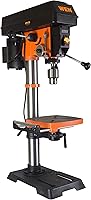
WEN 4206T Drill Press Review: Worth It? (October 2026)
The WEN 4206T drill press suits small workpieces and compact home shops. Choose it for repeatable hole placement and depth; choose a larger model if you need more reach or frequent speed changes.
On this page (9 sections)
- Who should buy the WEN 4206T drill press?
- What can its swing and spindle travel handle?
- How should you choose among the 5 speeds?
- Which alternative solves your biggest limitation?
- Is the worktable large enough for your stock?
- How should you set up the 4206T?
- Which drilling mistakes should you avoid?
- What care does a compact drill press need?
- Should you choose the WEN 4206T drill press?
The WEN 4206T drill press is a good choice for small parts, shop jigs and repeatable drilling in a compact home shop. Choose a larger press if your usual work needs more reach, more room for fixtures or easier speed changes.
Its main buying question is simple: will your work fit under the bit while remaining securely clamped? Answer that before comparing motor size, alignment aids or other features.
Who should buy the WEN 4206T drill press?
Buy the 4206T for small, supported workpieces and batches of similar holes. Skip it if you regularly drill near the center of wide panels or switch between jobs that need very different speeds.
WEN 4206T 8-Inch Drill Press: Best for compact home shops

- 8-inch swing
- 2-inch spindle travel
- 5 speeds from 750 to 3200 RPM
- 45-degree beveling worktable
A compact press for small parts, shop jigs and repeated hole depths. Choose it when your work fits its reach and you can group jobs around fixed speed settings.
Pros
- Compact 23-inch height
- Locking depth stop for repeated depths
- Slotted table accepts clamps and vises
- Chuck key has onboard storage
Cons
- Less reach than 10-inch alternatives
- Speed changes require moving the belt
- Larger workpieces need added support
The locking depth stop makes sense for repeated shallow holes in parts such as blocks, spacers and shop fixtures. Set the depth on scrap of the same thickness before drilling the finished pieces.
Its 2.3-amp induction motor belongs in a buying decision built around suitable bits and manageable cuts. Motor amperage alone doesn't give you a safe hole-size limit for every material.
When does the WEN 4206T drill press fit a first workshop?
The 4206T fits a first workshop when you need controlled vertical feed more often than extra reach. A press helps hold the drilling axis steady, but accurate holes still depend on layout, a sharp bit and secure workholding.
It also suits projects you can group by bit and speed, such as drilling several matching brackets before changing the setup. Frequent changes between small drill bits and large cutters make fixed belt settings less convenient.
Read our guide to choosing a drill press for a home shop if you're still deciding which capacity limits matter most.
What can its swing and spindle travel handle?
The 4206T's 8-inch swing means about 4 inches from the spindle center to the column. That measurement determines whether the intended hole can reach the bit without the workpiece hitting the column.
An 8-inch swing isn't an 8-inch drilling depth or a promise that any 8-inch-wide object will fit. Shape, hole position and the direction you can turn the piece all matter.
Measure from your intended hole center to the edge that will face the column. Include any jig or fence that must sit behind the work, since those can use some of the available space.
Its 2-inch spindle travel is the downward movement available in one feed stroke. Before buying, consider the whole stack beneath the chuck: bit, workpiece, backing board and any vise or fixture.
A taller fixture can leave less space for stock even when the hole itself is shallow. Don't assume that moving up to a larger swing also gives more travel or enough clearance for a tall vise.
How should you choose among the 5 speeds?
Choose speed by bit type, bit diameter and material, then use the nearest suitable setting allowed by the bit maker. The 4206T offers 750, 1100, 1500, 2100 and 3200 RPM.
Changing speed requires stopping and unplugging the press, then moving the belt according to the manual. Plan similar operations together so you aren't repeatedly opening the cover during a short project.
Larger cutters generally call for lower speeds than small twist bits. Don't use the lowest setting as a universal answer: some cutters and materials may need a speed below this press's range.
Our drill press speed chart for wood helps you plan common woodworking jobs. Follow the bit manufacturer's limits where they differ from a general chart.
Feed pressure matters too. Use steady pressure that lets the bit cut, and stop if the work shifts, the bit binds or the machine struggles.
For deeper holes, withdraw the bit as needed to clear chips. Stop the spindle before clearing loose chips with a brush, and keep your fingers away from the cutting area.
Which alternative solves your biggest limitation?
Choose the larger WEN for flexible speed control, the SKIL for visibility aids, or the VEVOR for extra reach with fixed settings. Each solves a different problem, so identify what would stop you from completing your usual work.
| Drill press | Swing | Speed setup | Main reason to choose it |
|---|---|---|---|
| WEN 4206T 8-Inch Drill Press | 8 in | 5 fixed settings | Compact home-shop setup |
| WEN 10-Inch Benchtop Drill Press | 10 in | Variable, 530–3100 RPM | Frequent speed changes |
| SKIL DP9505 10-Inch Drill Press | 10 in | 5 settings, 610–2800 RPM | Worklight and laser alignment |
| VEVOR 10-Inch Benchtop Drill Press | 10 in | 5 fixed settings | More reach for wider parts |
WEN DP1062V: choose it for frequent speed changes
The larger WEN suits buyers who move between materials and bit sizes during the same project. Its mechanical variable-speed control lets you select RPM within its range, and a digital readout shows the current speed.
That is useful when you want more choice than fixed pulley steps allow. Follow WEN's instructions for operating the speed lever rather than treating it like an ordinary power control.
Its 8 x 7.5-inch table gives more support area than the compact WEN's table. However, spindle travel remains 2 inches, so it isn't the automatic answer to deeper single-stroke drilling.
Skip it if your jobs use a few repeat settings and bench clearance is tight. At about 33.9 inches tall, it needs a different space plan from the 4206T.
SKIL DP9505: choose it for better task visibility
The SKIL suits a work area where seeing layout marks is difficult. Its LED worklight illuminates the drilling area, while laser alignment offers a starting guide for positioning the hole.
Check the laser against the bit before relying on it for close layout work. Lowering the stopped bit toward a marked center remains a useful final alignment check.
An adjustable depth stop supports repeated depths, and the bump-off switch gives you another feature to consider when planning access to the controls. Keep that switch reachable once the machine and nearby storage are in place.
Skip the SKIL if continuous speed adjustment is your main reason for upgrading. It still uses 5 speed choices.
VEVOR DP1006L: choose it for wider DIY work
The VEVOR suits buyers whose parts need more reach than the compact WEN allows. Its 10-inch swing puts the spindle center about 5 inches from the column, which can matter for holes just beyond the 4206T's reach.
It has a 3.2-amp induction motor, fixed speed settings and a tilting worktable. Plan for its 28.7-inch height before choosing a shelf or cabinet location above it.
Confirm the exact RPM settings before ordering if your intended cutter has a narrow speed range. VEVOR gives conflicting ranges for this model, making that check part of the buying decision.
Skip it if you need clear speed information before committing to a specific drilling task. For more options, see our best benchtop drill presses guide.
Is the worktable large enough for your stock?
The 6.5 x 6.5-inch table suits small pieces, but long boards and wide panels need support beyond its edges. Workpiece size matters less than whether it stays flat and stable throughout the cut.
The slotted table accepts suitable clamps and vises. Plan their positions before buying, since a clamp that blocks the feed path or lifts the stock can spoil an otherwise workable setup.
Use a backing board beneath through-holes in wood to support the exit fibers and protect the metal table. Set the drilling position so the bit can pass through the work without striking the table or a clamp.
For overhanging stock, use stable support set level with the worktable. Avoid an arrangement that tips the work as the bit enters or breaks through.
The table bevels up to 45 degrees in either direction for angled holes. After an angled job, return it to square with the spindle and check that position before drilling straight holes.
How should you set up the 4206T?
Mount it on a stable bench with enough working clearance, then check alignment and workholding before the first project. Its roughly 23-inch height and 7 x 11-inch base are starting measurements, not the whole space requirement.
Leave room to open the belt cover, turn the feed handle and move stock around the column. The machine weighs 32 pounds, so choose a support that also handles the workpiece and drilling forces.
Use the base mounting holes as directed in the manual. A press that shifts on the bench makes careful layout and clamping much harder.
Install the chuck according to WEN's instructions, keeping the mating surfaces clean. The keyed chuck accepts bit shanks from 1/20 to 1/2 inch; that capacity describes what it can grip, not every hole it can safely cut.
Remove the chuck key immediately after tightening the bit and place it in its onboard holder. Check that the bit clears the work, backing board and clamps through the planned feed movement.
If several machines share one bench, plan where stock will enter and leave each station. Our small woodworking shop setup guide helps you allow room for the work as well as the tools.
Which drilling mistakes should you avoid?
Avoid hand-holding small parts, forcing a stalled cut and trusting an unchecked setup. A drill press controls the bit's path, but it doesn't stop loose stock from spinning.
Clamp the work or secure a suitable drill-press vise to the table. A vise sitting loose on the table can move with the part, so plan how the whole assembly is restrained.
A general bench vise serves different jobs from a drill-press vise. Our bench vise size guide can help you plan a separate station for filing, sawing and other bench work.
Don't wear gloves near the rotating spindle, and keep loose sleeves, jewelry and hair clear. Wear eye protection and wait for a full stop before moving the work.
Set repeated hole depths using scrap that matches the finished stock. If you change bit projection, stock thickness or the backing board, check the stop again.
Our how to use a drill press guide covers the drilling sequence and workholding in more detail.
What care does a compact drill press need?
Keep the table clean, mounting secure and moving parts maintained as the manual directs. Basic care preserves useful reference surfaces and makes setup problems easier to spot.
Unplug the press before cleaning, belt adjustments or maintenance. Brush away chips rather than wiping sharp debris with your hand.
Remove resin and grime with methods suitable for the surface, and follow WEN's guidance for lubrication and rust protection. Keep belts and pulleys free of oil.
If vibration, slipping or unusual noise develops, stop and inspect the setup before continuing. Check the bit, workholding and accessible fasteners with the machine disconnected.
Should you choose the WEN 4206T drill press?
Choose the WEN 4206T drill press if your parts fit its reach and you can organize work around fixed speeds. Before buying, measure one typical project with its backing board and planned clamps or vise included.
Choose the larger WEN when speed changes interrupt your work, the SKIL when task lighting matters, or the VEVOR when extra reach is the priority and its speed choices meet your needs.
If your work exceeds the 4206T's clearance or needs slower cutter speeds, keep comparing. Use our best benchtop drill presses guide to find a machine that fits the jobs you expect to repeat.
Frequently asked questions
What size is the WEN 4206T drill press?
The WEN 4206T is about 23 inches tall, with a 7 x 11-inch base and a 6.5 x 6.5-inch worktable. Allow extra room for the head, feed handle, belt cover and workpiece overhang; measure the full working area rather than planning around the base alone.
How many speeds does the WEN 4206T have?
The WEN 4206T has 5 belt-selected speeds: 750, 1100, 1500, 2100 and 3200 RPM. Unplug the machine before repositioning the belt, then follow the manual for tension and cover closure; choose the setting to suit your bit diameter and material, using the bit manufacturer's speed guidance.
Can the WEN 4206T drill angled holes?
Yes, its worktable bevels up to 45 degrees left or right for angled drilling. Clamp the work securely, check bit clearance and lock the table before starting; afterward, return the table to square and verify it with a square instead of relying only on the angle scale.
Is the WEN 4206T suitable for a home shop?
Yes, it suits a home shop focused on small parts, shop jigs and repeated hole depths. Skip it if your usual holes sit beyond its reach or your bits need speeds below its minimum; a larger swing helps with reach, but check spindle travel and workholding space separately.