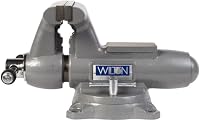
What Size Bench Vise Do I Need?
To decide what size bench vise you need, start with 4 to 6 in jaws for general home shop work. Match the jaw opening and throat depth to your regular workpieces, allow for pads, and confirm your bench can support the vise and the work.
On this page (7 sections)
- What size bench vise do you need?
- Which bench vise measurements matter most?
- Which of these 3 vises suits your work?
- How do you mount a bench vise without crowding the bench?
- How do you protect the workpiece and care for the vise?
- What mistakes lead to the wrong vise size?
- How should you make the final bench vise size decision?
For general home shop work, 4 to 6 in jaws are a useful starting point when deciding what size bench vise you need. The final choice depends on jaw opening, clearance below the jaws, and the bench that will carry it.
Choose around the parts you hold regularly, not the biggest project you might attempt someday. A larger vise takes permanent space, while an awkward occasional job may be better served by separate clamps.
What size bench vise do you need?
Choose the smallest vise that comfortably holds your regular work, including protective jaw pads. Size up when your measured parts need more opening, deeper clearance, or a broader gripping surface.
Use these starting points to narrow your search:
- Small repairs and hobby parts: Start around 3 to 4 in jaw width when the pieces are small and forces are light.
- Mixed home shop work: Start around 4 to 6 in, then check opening and throat depth against your stock.
- Larger brackets, pipe, and repeated metalwork: Compare 6 in models, with close attention to jaw shape, mounting, and permitted uses.
- Long boards and panels: Plan separate supports or woodworking clamps rather than relying on vise size alone.
These are shopping ranges, not load limits. A jaw-width number does not tell you how much force a vise or its mounting can take.
For a compact workshop, use our guide to setting up a small woodworking shop to plan the vise beside your other benchtop tools.
What size bench vise do I need for my actual parts?
Measure 3 representative workpieces: your smallest common part, your usual part, and your largest regular part. Measure the section that goes between the jaws, rather than the overall project.
Write down the required gap, the width available for jaw contact, and how far the part must extend below the jaw tops. Include the thickness of any pads you plan to use.
For example, stock that is 3 in thick needs more than a 3 in opening once protective covers are fitted. Avoid choosing a vise that must sit at its maximum opening for nearly every job.
Which bench vise measurements matter most?
Jaw width, jaw opening, and throat depth answer different questions. Check all 3 before comparing extra features.
- Jaw width: The side-to-side width of the gripping face, which affects the available contact area.
- Jaw opening: The maximum gap between the jaws, which limits the thickness that fits.
- Throat depth: The clearance from the jaw tops down to the slide or body, which limits how deeply a part can sit.
- Pipe capacity: The range of round stock the pipe jaws can hold, separate from the main jaw opening.
A long workpiece does not automatically need wide jaws. It needs a secure gripping area and outside support so its weight does not twist it out of position.
Throat depth matters especially with upright plates and brackets. A part may fit between open jaws yet hit the body before its intended gripping area reaches them.
Do not use material strength figures alone to rank complete vises. Body shape, jaws, base locks, and mounting all affect how the tool suits your work.
Which of these 3 vises suits your work?
Choose the WVA6 for larger general clamping, the 746 for a permanent mechanics station, or the IQ Vise for frequent angle changes. Their differences show why jaw width alone cannot settle the choice.
Wilton WVA6: for larger general shop parts
The Wilton WVA6 has 6 in jaws, a 6 in opening, and 3.75 in throat depth. It suits buyers whose regular stock needs that opening without the weight of the 746.
Its 25.7 lb weight still calls for a secure bench mount. The ductile iron body has a tensile strength of 72,000 PSI, but that figure is not a clamping-force limit.
A 1/4 to 3 in pipe capacity adds a reason to choose it for round stock. Its large anvil surface also gives you a place for suitable forming work within Wilton's instructions.
Skip it if your work is mostly tiny finished parts that need frequent tilting. You would be choosing extra capacity when positioning and surface protection matter more.
Wilton 746: for a permanent mechanics bench
The Wilton 746 suits a dedicated metalworking or repair station where the bench can support its 64 lb weight. Its 360° swivel base and double lockdowns let you change working direction without releasing the part.
It has 6 in jaws, a 5-3/4 in opening, and 4-1/8 in throat depth. Compared with the WVA6, it offers deeper throat clearance but slightly less opening.
Replaceable hardened steel serrated top jaws and replaceable pipe jaws suit repeated metalwork. Its enclosed spindle and nut are useful features where filings and debris are part of the job.
Skip it for a bench you frequently move or a light folding work surface. Choose its mounting and jaw features because they suit your routine, rather than treating extra weight as a reason by itself.
IQ Vise: for repairs needing several angles
The IQ Vise suits detail work and repairs that require tilting, as well as turning the part. Its ball-and-socket mount rotates, tilts, and swivels, with a Quick Cam lever to lock the working angle.
It has smooth parallel 5 in jaws and includes Flex-Fit jaws. The vise weighs 10 lb and comes with 3 carriage bolts, washers, and nuts for mounting.
Work IQ Tools rates the locking pin's 8 fixed working positions for up to 130 ft-lb of torque. That rating applies to those engaged positions, so follow the locking instructions before applying force.
Skip it if your main need is deep clearance or wide opening for bulky stock. Confirm those capacities for your parts before choosing it for its positioning features.
How do you mount a bench vise without crowding the bench?
Mount the vise where its jaws, handle, and workpiece have clear travel, with support beneath the mounting area. Follow the model's mounting instructions and use hardware suited to the bench.
Before drilling, place the vise in position and check these clearances:
- Open the jaws and move the handle through its full travel.
- Hold a long sample piece vertically and horizontally at the jaws.
- Check swivel or tilt travel with the sample piece in place.
- Look below the bench for drawers, rails, and access to nuts.
A bench corner often gives long stock more room, but the top must be supported there. Reinforcement may be needed if the top flexes or the mounting area is weak.
Use the small shop setup guide to preserve working space around neighboring tools. Do not place the vise where clamped stock blocks a machine's feed path.
How do you protect the workpiece and care for the vise?
Use suitable jaw covers and steady hand pressure to hold the part without unnecessary damage. Keep the gripping surfaces clean so chips do not press into wood or finished metal.
Serrated jaws can mark soft surfaces. Fit appropriate pads, account for the opening they consume, and keep them free of oil when friction is needed for grip.
Support long or heavy stock before tightening. Clamp close to the area you are filing or sawing to reduce vibration, while leaving safe clearance for the tool.
Brush away filings and wipe moisture from exposed metal after use. Follow the manufacturer's lubrication directions, especially for enclosed mechanisms that should not be opened or greased casually.
Use striking surfaces only for work the manufacturer permits. Wear eye protection when cutting, filing, or striking metal, and keep fingers clear as the jaws close.
What mistakes lead to the wrong vise size?
The most common mistake is buying by jaw width alone. A wide vise can still lack the opening or throat clearance your part needs.
Avoid these other mistakes:
- Buying for one rare job: Choose for repeated work and arrange separate clamps for unusual pieces.
- Ignoring pad thickness: Protective covers reduce the usable opening.
- Using extra leverage: Never add a pipe to the handle or strike it to increase clamping pressure.
- Leaving stock unsupported: Overhanging weight can twist the part and load the bench.
- Confusing bench and machine vises: A bench vise does not replace a correctly secured drill-press vise.
For machine drilling, follow our guide to using a drill press. If the station also includes sharpening, read how to use a bench grinder safely before arranging the work area.
How should you make the final bench vise size decision?
To settle what size bench vise you need, let the measured part rule out unsuitable capacities first. Then choose the jaw style and movement that make your repeated tasks easier.
Pick the WVA6 when larger general clamping and pipe work drive the choice. Pick the 746 for a permanent mechanics bench where replaceable jaws and a swivel base earn their space.
Choose the IQ Vise when reaching several sides of a small repair matters more than bulk capacity. If none fits your measurements, keep looking rather than forcing the work into an unsuitable tool.
Take your opening, throat, pad, and mounting measurements to our best bench vise guide to compare models against a clear set of needs.
Frequently asked questions
What size bench vise is best for woodworking?
A bench vise with 4 to 6 in jaws is a useful starting point for small woodworking jobs; match its opening to the stock thickness plus protective pads, and check clearance below the jaws. For frequent edge planing or large panels, consider a woodworking vise or separate clamps and supports.
Is a 6-inch bench vise too big for a small shop?
A 6 in bench vise can fit a small shop if the bench supports it and leaves room for the handle and workpiece; jaw width does not describe the whole footprint. Measure the mounting area, check clearance underneath, and allow space for any swivel or tilt movement.
What does throat depth mean on a bench vise?
Throat depth is the distance from the top of the jaws down to the slide or body beneath them; it controls how far a part can extend below the gripping surface before meeting an obstruction. Check it closely for brackets, wide plates held upright, and other awkward shapes.
Can one bench vise hold wood and metal?
One bench vise can hold wood and metal when its jaws and capacity suit both jobs; use suitable soft jaw covers on wood or finished surfaces, and remove trapped metal chips before switching materials. Keep long pieces supported, and use only enough clamping pressure to prevent movement.