7 Best Bench Vises (October 2026)
The best bench vises for home shops include the Wilton WVA6 6-Inch Apprentice Vise for mixed home projects, the Wilton 746 6-Inch Bench Vise for dedicated repair benches, and the IQ Vise 360 Articulating Bench Vise for detailed repair work.
On this page (7 sections)
The Wilton WVA6 6-Inch Apprentice Vise is the best bench vise for most home shops because it balances useful capacity with a manageable size. Choose the IQ Vise for frequent angle changes, or the Wilton reversible model when bulky workpieces regularly outgrow ordinary jaws.
Your choice should start with what you clamp: small brackets, pipe, flat bar or large assemblies. A vise that fits those jobs and mounts properly will serve you better than one chosen only by jaw width.
For a crowded work area, our guide to benchtop workshop machines for a small woodworking shop helps you plan the layout. Start with what size bench vise do I need? if you need help measuring your work.
Our picks at a glance
-
1
-
2

-
3

- 4
 Check it
Wilton 8-Inch Reversible Bench Vise
Best for oversized workpieces - 5
 Check it
Wilton WVA4 4-Inch Apprentice Vise
Best for compact benches - 6
 Best for occasional home repairsCheck it
- 7
 Check it
Kitvance 6-Inch Forged Steel Bench Vise
Best for shallow flat stock
How we chose the best bench vises
We compared capacity, movement and mounting needs to choose bench vises for distinct home-shop jobs. Jaw opening and throat depth matter alongside jaw width, while replaceable jaws and angle control serve different working habits.
The order favors a useful all-purpose choice first, followed by options for permanent repair stations, detailed work and unusually large stock. A lower-ranked compact vise can still be the right choice for a smaller bench.
Material strength figures are not clamping-force ratings or permission to apply extra leverage. We also avoided comparing unlike figures as though they measured the same thing.
| Product | Best for | Jaw width | Jaw opening | Throat depth | Our score |
|---|---|---|---|---|---|
| Wilton WVA6 6-Inch Apprentice Vise | mixed home projects | 6 in | 6 in | 3.75 in | 9.0 |
| Wilton 746 6-Inch Bench Vise | dedicated repair benches | 6 in | 5.75 in | 4.125 in | 8.8 |
| IQ Vise 360 Articulating Bench Vise | detailed repair work | 5 in | 8.7 | ||
| Wilton 8-Inch Reversible Bench Vise | oversized workpieces | 8 in | 9.25 in; 14.5 in reversed | 4.75 in | 8.6 |
| Wilton WVA4 4-Inch Apprentice Vise | compact benches | 4 in | 4 in | 2.625 in | 8.5 |
| Yost LV-4 Homeowner's Vise | occasional home repairs | 4.5 in | 3 in | 2.6 in | 8.4 |
| Kitvance 6-Inch Forged Steel Bench Vise | shallow flat stock | 6 in | 4.3 in | 2 in | 8.0 |
Bench vise reviews: which model fits your work?
Choose the WVA6 for varied projects, then consider the alternatives when a specific task calls for different capacity or movement. Each pick below includes the reason to buy it and the situation where another model makes more sense.
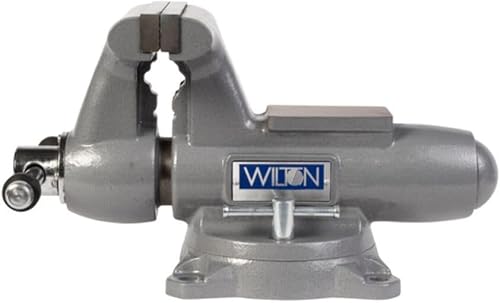
Wilton WVA6 6-Inch Apprentice Vise: Best for mixed home projects
- 6 in jaw width and opening
- 3.75 in throat depth
- 1/4 to 3 in pipe capacity
- Large anvil surface
Choose the WVA6 for a home shop that handles flat stock, pipe and forming jobs. Its opening and throat depth give varied work more room than the compact picks.
Pros
- Equal jaw width and opening
- 72,000 PSI ductile iron
- Anvil surface for forming
Cons
- Takes more room than the WVA4
- Less angle control than the IQ Vise
The WVA6 suits a home shop that moves between cutting flat bar, filing brackets and holding pipe for repairs. Its 6 in opening and 3.75 in throat give those jobs room without requiring the largest vise in this group.
The body uses 72,000 PSI ductile iron, and the vise weighs 25.7 lb. That makes it easier to plan around than the heavier Wilton options, though the bench still needs to resist pushing and twisting forces.
Pipe capacity runs from 1/4 to 3 in, so this is a useful choice when round stock is part of your normal work. The anvil surface also gives you a designated area for appropriate forming tasks.
Choose it when your projects vary enough that a small opening would become a regular limit. Skip it for a bench devoted to tiny repair parts, where the WVA4 saves space, or for work that needs the IQ Vise's tilting head.
Wilton 746 6-Inch Bench Vise: Best for dedicated repair benches
- 6 in jaw width
- 5.75 in jaw opening
- 360° swivel base with double lockdowns
- Replaceable hardened steel top and pipe jaws
The 746 suits a permanent repair station where replaceable jaws and a fully enclosed spindle matter. Its swivel base changes the approach angle without moving the mounting.
Pros
- Replaceable top and pipe jaws
- Double base lockdowns
- Fully enclosed spindle and nut
Cons
- Heavy at 64 lb
- Substantial support and lifting needs
The Wilton 746 is a better fit for a dedicated repair bench where the vise will stay mounted. Replaceable hardened steel top and pipe jaws make sense for repeated gripping work because worn jaw surfaces can be changed.
Its fully enclosed spindle and nut protect the screw mechanism from direct exposure. Wilton also uses a powder coat finish intended to resist scratches, though bare gripping surfaces still need normal care.
The 360° swivel base has double lockdowns, letting you change your approach and then secure the working position. Its 4.125 in throat provides room for parts that must sit farther below the jaw tops.
Choose the 746 if replaceable jaws and a permanent work station match your plans. Skip it if you need to remove the vise often: its 64 lb weight adds lifting demands and calls for substantial bench support.
IQ Vise 360 Articulating Bench Vise: Best for detailed repair work
- Articulating ball and socket
- 8 fixed working positions
- 5 in smooth parallel jaws
- Flex-Fit jaws included
Choose the IQ Vise when bringing a part into a useful working angle matters most. Its Quick Cam lever controls positioning, and interchangeable pads adapt the jaw contact.
Pros
- Tilts as well as swivels
- Quick Cam positioning lever
- Included Flex-Fit jaws
Cons
- Extra jaw types and accessories sold separately
- Fixed-position torque rating requires locking-pin engagement
The IQ Vise suits detailed repairs where bringing the part toward you makes the job easier. Its ball-and-socket head rotates, tilts and swivels, so you can change the working face without repeatedly removing the part.
A Quick Cam lever controls the angle lock, while a locking pin engages 8 fixed working positions. WORK IQ TOOLS rates those fixed positions for up to 130 ft-lb of torque; that figure applies to the pinned positions, not every possible angle.
The smooth parallel jaws accept included Flex-Fit pads. Extra jaw types and IQ Connect accessories are sold separately, so decide what contact surface your work needs before adding accessories.
Choose this design for awkward access during filing, hobby work or repairs. Skip it if your main need is an anvil for forming, and remember that tilting a clamped part still requires clearance around the bench and support for anything long.
Wilton 8-Inch Reversible Bench Vise: Best for oversized workpieces
- 8 in jaw width
- 9.25 in opening, or 14.5 in reversed
- 360° swivel base with dual lockdowns
- Two anvil work surfaces
The reversible arrangement gives bulky workpieces much more clearance than the other picks. Choose it for a large permanent bench where that extra opening will see regular use.
Pros
- Largest opening in this group
- Replaceable serrated steel jaws
- Built-in pipe jaws
Cons
- Weighs 74.5 lb
- Large footprint and working-clearance needs
The Wilton 4800R is for buyers whose bulky workpieces regularly exceed ordinary openings. It opens 9.25 in in the normal arrangement and 14.5 in when reversed, giving this group its widest clamping space.
The reversible feature is worth choosing only if you can name jobs that need it. A wide opening also requires space for the moving jaw, the handle and the material extending beyond the bench.
Replaceable serrated steel jaws, built-in pipe jaws and 2 anvil surfaces cover different holding and forming tasks. The swivel base and dual lockdowns let you position the vise without changing its mounting location.
Plan carefully around its 74.5 lb weight and 22.8 x 11 x 11.8 in overall dimensions. Choose it for a substantial permanent bench; skip it for routine small hardware or a light worktable where its size would consume useful assembly space.
Wilton WVA4 4-Inch Apprentice Vise: Best for compact benches
- 4 in jaw width and opening
- 2.625 in throat depth
- 1/8 to 2 in pipe capacity
- Large anvil surface
The WVA4 suits smaller hardware, brackets and pipe work on a crowded bench. It keeps a useful opening without the size and weight of the larger Wilton models.
Pros
- Compact size for smaller work
- 72,000 PSI ductile iron
- Pipe capacity starts at 1/8 in
Cons
- Less reach than the larger Wilton models
- Limited room for bulky assemblies
The WVA4 suits buyers who handle small parts on a shared bench. Its 4 in jaw width and matching opening leave useful capacity for brackets, hardware and compact repair jobs without moving up to the larger Wilton models.
Its 13.2 lb weight makes lifting and positioning less demanding, but it still needs a secure mounting. Low weight does not make a vise suitable for an unsupported benchtop edge.
The ductile iron body and anvil surface suit a mix of gripping and appropriate forming work. Pipe capacity starts at 1/8 in, making this model worth considering when small round stock is part of your work.
Choose it when your normal parts fit comfortably, including any protective pads. Skip it when assemblies need to sit deeper between the jaws, or when thick stock already brings you close to its maximum opening before you add jaw protection.
Yost LV-4 Homeowner's Vise: Best for occasional home repairs
- 4.5 in jaw width
- 3 in jaw opening
- 240° swivel base
- Pipe capacity from 0.6 to 1.85 in
The LV-4 fits occasional assembly and maintenance work with small parts. Its swivel base helps change your approach, but the opening limits bulky work.
Pros
- Swivel base for changing approach
- 9 lb weight
- Pipe jaws for round stock
Cons
- Smallest opening in this group
- Mounting hardware not included
The Yost LV-4 fits occasional home maintenance where small parts need holding during assembly, filing or cutting. Its 240° swivel base helps you turn the work toward a comfortable approach.
The main limit is its 3 in opening, which is smaller than its jaw width might suggest. Measure assembled parts as well as raw stock, since a projecting bolt or attached bracket can prevent a part from fitting.
At 9 lb, the LV-4 is the lightest pick here. Mounting hardware is not included, so plan suitable fasteners for your bench rather than treating installation as an afterthought.
Choose it for a homeowner's bench with modest clamping needs and a useful place for a rotating vise. Skip it if larger assemblies are common, and use protective pads for finished surfaces because the serrated jaws can leave marks.
Kitvance 6-Inch Forged Steel Bench Vise: Best for shallow flat stock
- 6 in jaw width
- 4.3 in maximum jaw opening
- 270° swivel base with dual lockdown nuts
- Includes 4 bolts
The Kitvance suits flat work that benefits from a broad jaw face without needing a deep throat. A swivel base, pipe jaws and included bolts cover basic bench setup.
Pros
- Broad jaw faces
- Dual swivel-base lockdown nuts
- Includes 4 mounting bolts
Cons
- Shallowest throat in this group
- Opening is smaller than jaw width
The Kitvance suits shallow flat workpieces that benefit from a broad gripping face. Its 6 in jaw width spreads contact across the work, but the 4.3 in opening and 2 in throat set tighter limits on what fits.
A 270° swivel base with dual lockdown nuts gives you a choice of approach angles. Built-in pipe jaws add another holding option when round stock needs securing.
Kitvance describes the construction as forged steel and claims up to 2,200 lb of clamping force. Treat the force figure as a capacity claim, not a target for every part: delicate or hollow material needs much less pressure.
The included 4 bolts are useful, but their fit still depends on your benchtop thickness and mounting arrangement. Choose this model for work that fits its shallow throat; skip it for deep parts or thick assemblies that need more clearance below or between the jaws.
How do you choose the best bench vise for your projects?
Choose by your largest routine workpiece, then check the contact surfaces, working angle and bench support. Occasional oversized jobs may need another holding method rather than a much larger permanent vise.
Which measurements matter for the best bench vise?
Opening determines what fits between the jaws, width determines the available face contact, and throat depth determines how far the part can sit below the jaw tops. Measure all 3 needs before comparing models.
Include protective pads in your measurements because they take up opening space. Also account for projections such as flanges, handles or fittings that can stop a part from sitting squarely.
Use your usual work as the guide rather than a single unlikely future project. Leave practical room to insert and position stock instead of planning every job at the vise's maximum opening.
Match the jaws to the material
Serrated jaws favor grip, while softer contact surfaces help protect finished wood, painted parts and smooth metal. A secure hold should not require damage to the workpiece.
Use suitable removable jaw covers when surface marks matter. Keep them clean because embedded metal chips can scratch a part even when the pad itself is soft.
Pipe jaws are shaped to support round stock, but thin-wall tubing still needs care. Tighten gradually and stop if the tube begins to flatten or distort.
For broad panels, furniture parts or long glue-ups, woodworking clamps or a dedicated woodworking vise may suit the job better. A general bench vise does not replace every kind of workholding.
Choose movement you will actually use
A swivel base changes direction; an articulating head also changes tilt. The first helps when approaching from another side, while the second can bring an awkward detail into view.
A swivel cannot solve every clearance problem because long material sweeps around with the vise. Picture that full path before choosing a mounting position beside a wall or machine.
If most work involves straight cuts or filing along one edge, simple positioning may be enough. Frequent repairs on irregular parts give you a stronger reason to choose articulation.
Compare construction and service features
Replaceable jaws matter most when repeated work wears the gripping faces. An enclosed screw mechanism also changes how exposed moving parts are to shop debris.
Do not use tensile strength alone to rank complete vises. Body shape, intended use, mounting and the way force reaches the vise all matter.
An anvil surface is useful for suitable forming work, but it does not turn the jaws or handle into striking tools. Follow the model's limits rather than assuming a large casting permits any hammering job.
Where should you mount a bench vise?
Mount the vise near a well-supported bench edge, with enough clearance to turn the handle and hold long stock. The best location balances access with the strength of the bench structure.
Stand where you expect to file or saw and check your reach before drilling. A position that forces you to lean over the bench will make ordinary jobs harder to control.
Check the whole bench, not just the top
The bench must resist sideways force and twisting as well as the vise's weight. A thick top on a loose frame can still move when you push against a clamped part.
Check the frame joints, legs and any casters or leveling feet. If the bench rolls, rocks or lifts during normal work, correct that before using the vise.
Through-bolts with suitable washers or backing plates can distribute mounting loads when the bench and manufacturer's instructions allow them. Use the required mounting holes and confirm that fasteners do not interfere with drawers or the moving mechanism.
Leave room for the workpiece
Check the moving jaw and handle through their travel before deciding where the mounting holes go. Leave enough access below the top to install and inspect the fasteners.
For upright stock, check that the bench edge will not block the part from hanging below the jaws. Support long horizontal pieces separately so their weight does not twist the grip.
Our small shop setup guide helps you plan that working space alongside other bench equipment. Keep assembly space available if the same bench serves several tasks.
How do you hold work securely without damaging it?
Clamp the part squarely with adequate jaw contact, then use only enough pressure to prevent movement. Support its weight and check the hold before starting the cut, filing stroke or repair.
Brush loose chips from the jaw faces first. Place the work near the center of the jaws where practical, with the working area close enough to the grip to limit flexing.
For filing or hacksawing, excessive projection can make the stock chatter. Move the work closer to the jaws while leaving room for the tool to clear them.
Apply pressure with the normal handle by hand. Do not add a pipe for leverage, strike the handle or use extra force to compensate for a poor fit.
Avoid the common workholding mistakes
Check the base lock as well as the jaws. A firm grip on the part will not stop an unsecured swivel from turning during work.
Do not clamp only a tiny corner of an irregular part and expect it to resist twisting. Reposition it, use suitable pads or choose a holding method that supports its shape.
Never use the vise as a press to force apart parts unless its instructions permit that operation. Gripping capacity does not guarantee a safe load for pressing, bending or impact.
A bench vise also stays on the bench when drilling with a handheld tool. For machine drilling, use workholding secured to the drill-press table as explained in how to use a drill press.
How do you care for a bench vise?
Keep the jaws and moving parts clean, dry and maintained as instructed. Regular checks help catch loose mounting bolts, damaged gripping faces and stiffness before the next job.
Brush away filings after work rather than driving them into gaps. Wipe off moisture, and use suitable corrosion protection on exposed metal while keeping gripping faces free of anything that could encourage slipping.
Follow the manufacturer's lubrication guidance for the screw and slide. An enclosed, permanently lubricated mechanism may need different care from an exposed screw, so adding grease everywhere is not a useful rule.
Check jaw screws, mounting fasteners and base locks for looseness. Stop using the vise if you find cracks, bent parts or a lock that will not hold its position.
If the handle becomes unusually hard to turn, remove the work and check for chips, damage or misalignment. Extra leverage can turn a small maintenance problem into a broken part.
Which bench vise should you choose?
Choose the best bench vise by the job that limits you most: insufficient opening, awkward access, limited bench space or repeated repair work. Resolve that need before paying attention to secondary features.
- Varied home projects: choose the WVA6 for a mix of flat stock, pipe and forming tasks.
- A permanent repair station: choose the Wilton 746 for replaceable jaws and an enclosed spindle.
- Frequent angle changes: choose the IQ Vise when tilting the part improves access.
- Oversized work: choose the reversible Wilton when its extra opening will earn its bench space.
- A crowded bench: choose the WVA4 when your usual parts fit its smaller capacity.
- Occasional maintenance: choose the Yost LV-4 when its opening covers your projects.
- Broad, shallow stock: consider the Kitvance when jaw-face width matters more than throat depth.
Before ordering, measure the intended mounting area and 3 representative workpieces. Include your largest routine part, an awkward shape and any protective pads you expect to use.
For grinder tasks at the same station, read our guide to using a bench grinder safely and compare our best bench grinders. Leave each tool the working clearance its job requires.
For related shop equipment, browse the grinders and vises category.
Our top 3 picks at a glance
-
1
-
2
-
3
Frequently asked questions
What size bench vise is best for a home shop?
A 4 to 6 in jaw width suits many home shops, but opening and throat depth must fit your actual workpieces. Measure your largest routine job, including protective jaw pads, before choosing.
Our bench vise size guide explains how to match those measurements to your bench and tasks.
Is a swivel base useful on a bench vise?
A swivel base helps you change your working direction without unclamping the part. It is useful when a long workpiece would otherwise hit the bench or when you need better access for a file.
Lock the base before applying force, and remember that swiveling does not tilt the jaws.
What is the difference between jaw width and jaw opening?
Jaw width is the side-to-side measurement of the gripping face, while jaw opening is the distance between the separated jaws. A wide jaw does not guarantee room for a thick object.
Throat depth adds a third limit: how far the workpiece can extend below the jaw tops before reaching the slide.
Can a bench vise hold pipe?
A bench vise can hold pipe with suitable pipe jaws used within their capacity. Seat the pipe in those jaws, support long sections and tighten only enough to stop movement.
Thin tubing can crush under pressure, so use suitable supports or a purpose-built holding method when ordinary pipe jaws would deform it.
How should I mount a bench vise?
Mount a bench vise to a sturdy, supported bench area using the manufacturer's instructions and suitable fasteners. Check underside access, bolt length, handle travel and clearance for long stock before drilling.
Use every required mounting hole, then check for movement in both the vise mounting and the bench before starting work.