7 Best Bench Grinders (October 2026)
The best bench grinders include the DeWalt DW758 8-Inch Bench Grinder for frequent metal grinding, the BUCKTOOL 6-Inch Bench Grinder for woodworking tool sharpening, and the WEN BG625V 6-Inch Variable Speed Grinder for varied garage jobs.
On this page (9 sections)
- Which bench grinders fit different shop tasks?
- The best bench grinders for sharpening, grinding, and polishing
- How do you choose the best bench grinder for your work?
- How much bench space does a grinder really need?
- How should you set up a new bench grinder?
- How do you grind tool edges without removing too much metal?
- What care keeps a bench grinder cutting properly?
- Which bench grinder mistakes should you avoid?
- Which bench grinder should you choose?
The best bench grinder for general shop grinding is the DeWalt DW758. Choose the low-speed BUCKTOOL instead if sharpening woodworking tools is your main job, or the WEN BG625V if you need speed control for mixed garage work.
Start with the task you repeat most: reshaping tool bevels, removing metal, cleaning rusty steel, or polishing parts. Those jobs need different wheel setups, and the highest-scoring grinder won't suit every bench.
If you're planning a compact workspace, start with our benchtop workshop machine setup guide. For setup and technique, see how to use a bench grinder.
Our picks at a glance
-
1
 Best for frequent metal grinding
DeWalt DW758 8-Inch Bench Grinder
9.1/10 our score
See it on Amazon -
2

-
3
 Best for varied garage jobs
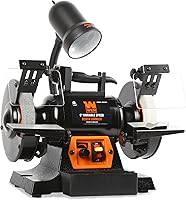
WEN BG625V 6-Inch Variable Speed Grinder
8.2/10 our score
See it on Amazon
- 4
 Check it
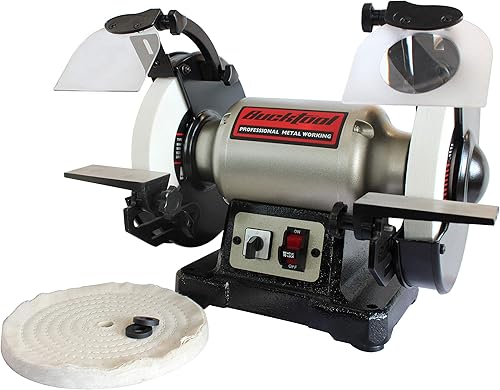
BUCKTOOL 8-Inch Grinder and Buffer Combo
Best for sharpening and polishing - 5
 Best for routine garage repairsCheck it
- 6
 Best for dedicated grinding stationsCheck it
- 7
 Check it
JET 6-Inch Bench Grinder with Wire Wheel
Best for rusty steel cleanup
Which bench grinders fit different shop tasks?
Choose low speed for a sharpening-focused bench, higher speed for frequent stock removal, and a wire wheel or buffer only when you need that function. Wheel choice and work support matter as much as the motor.
We compared these grinders by task fit, speed options, included wheels, work rests, and mounting features. The order favors general grinding, while the badges identify the buyer each machine serves best.
| Product | Best for | Wheel size | Motor | Speed | Our score |
|---|---|---|---|---|---|
| DeWalt DW758 8-Inch Bench Grinder | frequent metal grinding | 8 in | 3/4 HP induction | 3,600 rpm | 9.1 |
| BUCKTOOL 6-Inch Bench Grinder | woodworking tool sharpening | 6 in | 1/3 HP | 1,750 rpm | 8.3 |
| WEN BG625V 6-Inch Variable Speed Grinder | varied garage jobs | 6 in | 2.5 amp | 2,000–3,400 rpm | 8.2 |
| BUCKTOOL 8-Inch Grinder and Buffer Combo | sharpening and polishing | 8 in | 1/2 HP induction | 1,725 or 3,450 rpm | 7.8 |
| VEVOR 6-Inch Bench Grinder | routine garage repairs | 6 in | 250 W induction | 3,450 rpm | 7.7 |
| JET 8-Inch Bench Grinder | dedicated grinding stations | 8 in | 1/2 HP | 3,450 rpm | 7.6 |
| JET 6-Inch Bench Grinder with Wire Wheel | rusty steel cleanup | 6 in | 1/2 HP | 3,450 rpm | 7.5 |
The best bench grinders for sharpening, grinding, and polishing
The DeWalt DW758 leads for general grinding, but the BUCKTOOL and WEN models give sharpening-focused buyers more control over pace. Read each pick's trade-off before choosing by score alone.
DeWalt DW758 8-Inch Bench Grinder: Best for frequent metal grinding
- 8-inch wheels
- 3/4 HP induction motor
- 3,600 rpm
- 12-1/2-inch distance between wheels
Choose the DW758 for frequent deburring, shaping steel, and working with longer pieces. Its fixed high speed favors material removal over a slow sharpening pace.
Pros
- Wide space between wheels for longer work
- Machined aluminum tool rests
- Cast iron base and motor housing
Cons
- No low-speed setting for delicate edge work
Choose the DeWalt DW758 if you regularly deburr steel, shape metal, or work on longer pieces. Its 8-inch wheels, 3/4 HP induction motor, and fixed 3,600 rpm speed make material removal its strongest reason to buy.
The 12-1/2-inch distance between wheels leaves working room around longer stock. That matters when the opposite guard or motor housing would otherwise crowd the part you're trying to position.
Precision-machined aluminum rests support the work, while the cast iron base and motor housing suit a permanent bench setup. It comes with 36- and 60-grit wheels, giving you a coarse shaping side and a less coarse grinding side.
Skip it if your main task is preserving thin cutting edges and you want a slow setting. You can sharpen suitable tools on a high-speed grinder, but this model asks for careful passes rather than offering speed adjustment.
Our DeWalt DW758 review looks more closely at its fit for a home shop.
BUCKTOOL 6-Inch Bench Grinder: Best for woodworking tool sharpening
- 6-inch wheels
- 1/3 HP motor
- 1,750 rpm
- 60- and 80-grit aluminum oxide wheels
A good fit for woodworkers who mainly reshape bevels and maintain tool edges. The fixed low speed favors controlled passes rather than rapid stock removal.
Pros
- Low-speed operation for controlled passes
- Tool-free adjustable rests
- Rubber-footed cast aluminum base
Cons
- No high-speed setting for bulk material removal
Choose the BUCKTOOL 6-inch grinder when woodworking tool edges come before heavy grinding. Its fixed 1,750 rpm speed gives you a slower pace for checking a bevel between light passes.
The 1/3 HP motor drives 60- and 80-grit aluminum oxide wheels. That pairing fits tool maintenance better than a setup built around a coarse wheel for removing large amounts of steel.
Tool-free adjustable rests make it easier to reset support for another bevel angle or compensate for wheel wear. The base is cast aluminum with rubber feet, and BUCKTOOL backs the grinder with a two-year limited warranty.
Skip this model if you mainly reshape thick steel parts or want to switch to high-speed grinding. A single low setting is useful for a focused sharpening station, but less flexible for a repair bench with varied jobs.
For woodworking tools, plan on honing after grinding rather than expecting a wheel alone to finish the edge. Our bench grinder safety guide covers preparation and technique.
WEN BG625V 6-Inch Variable Speed Grinder: Best for varied garage jobs
- Variable speed from 2,000 to 3,400 rpm
- Flexible work light
- 36- and 80-grit wheels
- Two-year warranty
Choose the WEN when your work changes between coarse shaping and lighter edge work. Variable speed, two wheel grits, and a flexible light support that mixed workload.
Pros
- Speed adjusts across a continuous range
- Flexible light illuminates the contact area
- Pivoting tool rests for angled work
Cons
- Minimum speed is higher than either BUCKTOOL low setting
Choose the WEN BG625V for a mix of shaping, deburring, and lighter edge work. Its variable-speed control lets you adjust the pace without committing to either a fixed low-speed or fixed high-speed machine.
The 2.5-amp motor operates from 2,000 to 3,400 rpm. Its lower limit is still above the BUCKTOOL low-speed options, which matters if sharpening is your main reason for buying.
A coarse 36-grit wheel and an 80-grit wheel cover distinct stages of a job. Use the coarse side to establish the shape, then move to lighter grinding only after removing the larger defects.
The flexible work light helps you see the contact area, and pivoting rests support angled work. WEN backs this grinder with a two-year warranty.
Skip it if you specifically want larger wheels or a dedicated low-speed sharpening setup. It makes more sense for the home garage where the next job may differ from the last one.
BUCKTOOL 8-Inch Grinder and Buffer Combo: Best for sharpening and polishing
- 8-inch wheels
- Dual speed: 1,725 and 3,450 rpm
- 80- and 120-grit wheels
- Buffing wheel included
This combo suits a shared grinding station used for tool edges and polishing projects. Two speed settings cover different jobs, while the included buffing wheel adds a separate finishing option.
Pros
- Low and high speed settings
- Buffing wheel included
- Independently adjustable tool rests
Cons
- Polishing requires an accessory change
- No coarse 36-grit wheel included
Choose the BUCKTOOL 8-inch combo if sharpening and polishing share one station. Its two speed settings let you select a slower pace for edge work or a faster pace for appropriate grinding tasks.
The 1/2 HP induction motor runs at 1,725 or 3,450 rpm. Included 80- and 120-grit white aluminum oxide wheels favor lighter grinding and bevel work over coarse reshaping.
A separate buffing wheel comes with the machine, so polishing is an accessory option rather than a third wheel ready to use. Allow time for a proper wheel change and guard setup when switching jobs.
The cast iron base has mounting holes, and the two cast aluminum rests adjust independently. Those rests let you keep different grinding angles on the two sides.
Skip this model if you mainly remove large amounts of metal and won't use the polishing option. Its appeal is the mix of low-speed edge work and finishing functions, rather than a coarse-wheel setup out of the box.
VEVOR 6-Inch Bench Grinder: Best for routine garage repairs
- 6-inch wheels
- 3,450 rpm
- 36- and 60-grit wheels
- LED work light
A straightforward choice for deburring and shaping steel parts during garage repairs. Its fixed speed, work light, and tool-free rest adjustment suit a basic grinding station.
Pros
- Built-in LED work light
- Tool-free rest adjustment
- Cast iron body with rubber feet
Cons
- No slower setting for fine edge work
Choose the VEVOR 6-inch grinder for routine steel repair jobs with a simple setup. It suits buyers who want to deburr a cut edge or reshape a suitable part without adjusting motor speed.
Its 250 W induction motor runs at a fixed 3,450 rpm. The included brown fused alumina wheels are 36 and 60 grit, covering coarse removal and lighter grinding.
A built-in LED light illuminates the work area, and the rests adjust without tools. Those features help when you move between parts that need different support angles during a repair.
The cast iron body sits on a steel plate base with rubber feet. Secure mounting still belongs in the setup plan, even when the machine has features intended to reduce movement.
Skip it if most of your work involves delicate bevels and you want a slower wheel. This grinder's reason to buy is straightforward high-speed grinding, not a wider range of sharpening speeds.
JET 8-Inch Bench Grinder: Best for dedicated grinding stations
- 8-inch wheels
- 1/2 HP motor
- 3,450 rpm
- Built-in coolant tray
Choose this JET for a permanent grinding station with lighting at both wheels and a nearby dipping tray. It remains a high-speed dry grinder, so careful heat control still matters.
Pros
- Battery-powered lights at both wheels
- Built-in coolant tray
- JET five-year woodworking machinery warranty
Cons
- Bench mounting bolts and nuts are not included
- No low-speed setting
Choose the JET 8-inch grinder when you want a dedicated station with lighting and a dipping tray. The tray keeps an appropriate cooling spot nearby, while battery-powered LED lights illuminate both wheels.
Its 1/2 HP motor turns 36- and 60-grit aluminum oxide wheels at 3,450 rpm. This is a high-speed dry grinder, so the tray doesn't turn it into a water-cooled sharpening machine.
Use light passes and follow the tool maker's cooling advice. Don't wait for a thin edge to overheat before paying attention to heat buildup.
JET includes batteries for the lights and backs the machine with its five-year woodworking machinery warranty. The base has mounting holes, but you'll need to arrange bench-mounting bolts and nuts separately.
Skip it if a slow sharpening pace is your priority. Also rule it out for aluminum or magnesium work, since JET specifically excludes those materials for this grinder.
JET 6-Inch Bench Grinder with Wire Wheel: Best for rusty steel cleanup
- 6-inch grinder
- 3,450 rpm
- 36-grit wheel
- Crimped wire wheel
The grinding wheel and wire wheel suit repair work that starts with rusty steel and ends with deburring. Skip it if you want coarse and fine abrasive wheels ready at the same time.
Pros
- Wire wheel ready for cleaning tasks
- Pre-drilled mounting base
- Cast iron construction and wheel guards
Cons
- Only one abrasive grinding grit included
Choose the JET 6-inch model if rusty steel cleanup regularly comes before grinding. A crimped wire wheel handles appropriate surface-cleaning work, while the abrasive wheel handles shaping and deburring.
The 1/2 HP motor runs at 3,450 rpm, and the grinding side uses a 36-grit vitrified aluminum oxide wheel. This arrangement suits repair work better than a sharpening station that needs both coarse and fine abrasive wheels ready.
The grinder has cast iron construction, cast iron wheel guards, and a pre-drilled mounting base. Adjustable eye shields and spark guards are included, along with totally enclosed, pre-lubricated ball bearings.
Skip it if your main goal is fine bevel work. You give up a second abrasive grit to keep the wire wheel available, so choose it because cleaning is a regular task.
Wire brushing needs its own careful work positioning because the wheel can catch an edge. Follow the manual for guarding, support, and the direction from which you present the part.
How do you choose the best bench grinder for your work?
Choose by your main task, suitable wheels, and speed, then check work support and bench fit. Extra power or another accessory won't fix a mismatch between the machine and the work.
Match the best bench grinder to your main job
A sharpening station should favor controlled passes and repeatable bevel support. A repair station should favor the wheel setup needed to remove burrs, reshape steel, or clean a surface.
Write down your three most common jobs before comparing machines. If two involve chisels or plane irons, low speed deserves more weight than a wire wheel or polishing accessory.
For occasional touch-ups, you may need a hone more often than a grinder. Grinding removes metal to restore shape; honing refines the cutting edge after that shape is right.
Decide between 6-inch and 8-inch wheels
An 8-inch wheel makes a shallower hollow grind than a 6-inch wheel because its curve is less pronounced. That can matter when you're shaping a tool bevel, though it doesn't make every larger grinder a better sharpener.
Wheel diameter also affects surface speed at a given rpm. Don't compare motor rpm alone and assume two different wheel sizes present abrasive to the work at the same rate.
Choose the size that suits your tools and replacement-wheel plans. Overall machine dimensions, rather than wheel diameter alone, determine how much bench space you need.
Choose fixed, low, variable, or dual speed
Low speed favors a slower working pace, while high speed suits faster removal with a suitable wheel. Neither setting removes the need for light pressure and heat control.
Variable speed lets you choose intermediate settings. Dual speed gives you two defined choices, which is enough if you mainly switch between sharpening and general grinding.
Motor power matters when removing material, but don't treat horsepower, amps, and watts as interchangeable comparisons. Choose task fit first, and avoid pushing harder to make a small grinder behave like a larger machine.
Match the wheel to the material and finish
Coarse abrasive removes defects; finer abrasive refines the shape and scratch pattern. Use the least aggressive wheel that can complete the job without prolonged rubbing.
Grit is only one part of wheel choice. Abrasive type, bond, wheel grade, dimensions, and permitted materials also affect whether a wheel is suitable.
Confirm diameter, width, arbor size, and speed rating before buying replacements. The wheel's rated maximum speed must meet or exceed the grinder's maximum operating speed.
Don't put soft metal on a wheel intended for steel. Loading the wheel with an unsuitable material can damage its cutting action and create hazards.
Check rests, jigs, and useful accessories
A repeatable bevel needs steady support, not just a slower motor. Check whether the rest can hold your tool at the required angle without interfering with the guard.
If you plan to use a sharpening jig, confirm its mounting needs and wheel compatibility before choosing the grinder. A basic rest and a dedicated jig serve different levels of angle control.
Treat lights, trays, and polishing accessories as useful extras after the core fit is right. A polishing wheel also needs suitable compound and a safe technique; it isn't a substitute for a fine grinding wheel.
How much bench space does a grinder really need?
A grinder needs space for the workpiece and maintenance, beyond the area covered by its base. Measure the longest part you expect to move across each wheel.
Check clearance beside the motor, in front of the rests, and around the guards. Shelves or another machine can block a long tool even when the grinder itself fits.
Choose a firm bench or suitable stand and follow the mounting instructions. Leave the switch easy to reach without leaning across a moving wheel.
Plan where sparks will travel before picking the location. Keep wood shavings, solvents, rags, and other combustible materials away from that path.
For a shared room, our small workshop setup guide can help you plan machine placement. Leave enough access to remove guards and change wheels without dismantling the whole bench.
How should you set up a new bench grinder?
Mount it securely, inspect the wheels, and set the guards and rests before switching it on. Follow the machine manual and wheel maker's instructions throughout the setup.
- Inspect the machine and wheels. Look for shipping damage, cracks, loose parts, or a wheel rubbing against its guard; don't run a damaged wheel.
- Check compatibility. Confirm that each wheel suits the grinder, operating speed, and material; perform any inspection procedure required for that wheel type.
- Secure the base. Use the specified mounting method and appropriate hardware on a stable surface.
- Adjust support and guards. Set the tool-rest and spark-guard gaps as directed, and turn the wheel by hand with power disconnected to check clearance.
- Prepare for startup. Wear suitable eye protection and a face shield, secure loose hair and clothing, and keep other people clear.
- Start from a safe position. Stand out of the wheel's plane during the initial run, following the manual's procedure, and stop if you notice unusual vibration or contact.
Built-in eye shields don't replace protective eyewear. Make adjustments only after the wheels stop and power is disconnected.
Position the rest so the work has support without creating a trapping gap. As a wheel wears, that gap changes and needs attention again.
How do you grind tool edges without removing too much metal?
Use light, brief passes and check the shape often. Stop grinding once you've restored the bevel or removed the damage, rather than chasing a polished finish on a coarse wheel.
Start with a clear target, such as removing a nick or correcting a rounded bevel. Marking the bevel can help show where the wheel is removing metal.
Support the tool on the rest and keep the intended angle steady. Move across the wheel's working face as instructed rather than cutting a groove in one spot.
Thin edges heat quickly, including at low speed. Follow the tool maker's guidance on cooling, and don't assume dipping is right for every tool material.
For chisels and plane irons, leave the final edge work to the appropriate honing method. That reduces the temptation to keep grinding an already thin edge.
Avoid freehand attempts on expensive or unfamiliar cutting tools until you understand their geometry. A drill bit, carving tool, and plane iron need different shapes, even though all can involve a grinding step.
What care keeps a bench grinder cutting properly?
Keep the wheels suitable, the working face maintained, and the support gaps correct. A wheel that rubs instead of cutting encourages heat and excessive pressure.
Dress the wheel when its face needs attention
A glazed or uneven wheel may need dressing with a compatible dressing tool. Follow the wheel and dresser instructions to restore the working surface and shape.
Dressing removes wheel material, so check the rest and guard gaps afterward. Don't try to cure persistent vibration by simply tightening every fastener or pressing harder on the work.
Check changes in noise or vibration
Stop if a grinder develops unusual vibration, rubbing, or a new noise. Disconnect power before checking the mounting, guards, wheel condition, and wheel installation.
Use the manual's troubleshooting steps before restarting. A cracked wheel needs replacement, and unexplained vibration needs a cause rather than continued use.
Clean without creating another hazard
Let the machine stop, disconnect power, and remove debris using the method in its manual. Keep the switch, ventilation openings, and work area clear.
Don't connect grinding sparks to an ordinary woodworking dust collector. Dust ports alone don't guarantee compatibility with a collection system, especially one that contains wood dust.
Store spare wheels where they won't be knocked, dropped, or exposed to damaging conditions. Handle them carefully during changes and use the specified flanges and mounting parts.
Which bench grinder mistakes should you avoid?
Avoid excess pressure, unsupported work, and the wrong accessory for the material. These mistakes can spoil a tool edge and create hazards even on a securely mounted machine.
- Grinding on the side of an unsuitable wheel. Use only the working surfaces allowed by the wheel maker.
- Holding very small parts too close to the wheel. Use an approved holding method, or choose another process when the part can't be controlled safely.
- Forcing a dull or loaded wheel. Stop and address the wheel condition instead of adding pressure.
- Leaving a wide rest gap. Recheck it as the wheel wears so the work can't be pulled into the opening.
- Treating wire brushing like abrasive grinding. A wire wheel can catch edges and shed wires, so follow its specific guarding and work-positioning instructions.
- Expecting one wheel to handle every material. Change to a compatible accessory and setup rather than improvising.
Some repair jobs are easier with the work held still and a hand tool brought to it. Our bench vise size guide helps you choose support for those tasks.
If you also need a vise for filing, fitting, or assembly, compare our best bench vises. A grinder and a vise cover different parts of a repair workflow.
Which bench grinder should you choose?
Choose the best bench grinder for the job you repeat, then confirm replacement wheels, mounting space, and work support before ordering. Use these decision rules to narrow the seven picks:
- Frequent metal shaping and deburring: choose the DeWalt DW758 for its general-grinding focus and room around longer work.
- Mostly woodworking tool bevels: choose the BUCKTOOL 6-inch for a fixed low-speed sharpening station.
- Mixed garage maintenance: choose the WEN BG625V when adjustable speed is useful across changing tasks.
- Sharpening plus occasional polishing: choose the BUCKTOOL 8-inch combo if you'll use the buffing accessory.
- Straightforward steel repair work: choose the VEVOR when a basic high-speed setup fits your needs.
- A permanent station with lighting and a tray: choose the JET 8-inch if those features suit your workflow.
- Rust removal alongside coarse grinding: choose the JET 6-inch with wire wheel to keep both functions available.
Before the first job, read how to use a bench grinder safely and set up the machine for the actual wheel and material you'll use.
Our top 3 picks at a glance
-
1
Best for frequent metal grinding
DeWalt DW758 8-Inch Bench Grinder
9.1/10 our score
See it on Amazon -
2
-
3
Best for varied garage jobs
WEN BG625V 6-Inch Variable Speed Grinder
8.2/10 our score
See it on Amazon
Frequently asked questions
Should I choose a 6-inch or 8-inch bench grinder?
Choose a 6-inch grinder for smaller work when its overall dimensions suit your bench. An 8-inch wheel produces a shallower hollow grind and offers more diameter as it wears.
For either size, compare speed, wheel compatibility, mounting space, and room to move your actual workpiece.
Is a low-speed bench grinder better for sharpening?
A low-speed bench grinder is a better starting point when sharpening is your main job because it gives you a slower pace for each pass. It can still overheat a thin edge.
Use an appropriate wheel, light pressure, and the tool maker's sharpening method, then hone the edge when needed.
What do the grit numbers on grinder wheels mean?
Lower grit numbers mean coarser abrasive, so a 36-grit wheel suits shaping and heavier material removal. Higher numbers, such as 80 or 120, suit lighter grinding and finer scratch patterns.
Grit alone doesn't determine compatibility: the wheel must also match the material, dimensions, arbor, and grinder speed.
Can a bench grinder sharpen woodworking tools?
Yes, a bench grinder can reshape the bevel on suitable chisels and plane irons, but honing is usually the next step for a finished cutting edge. Keep the tool supported and avoid overheating its thin edge.
Our bench grinder safety guide explains the setup and basic technique.
Do I need to bolt down a bench grinder?
Securely mount a bench grinder to a stable bench or suitable stand using the method in its manual. Rubber feet don't replace secure mounting, and hardware may need to be bought separately.
Leave room for the workpiece, guard adjustments, wheel changes, and safe access to the switch.