How to Use a Bench Grinder Safely
Here's how to use a bench grinder safely: secure the machine, check the wheel and guards, and support the work on the rest. Wear safety glasses with a face shield, stand clear of the wheel's plane during startup, and grind with light pressure.
On this page (10 sections)
- How do you use a bench grinder step by step?
- What should you check before starting?
- What safety gear should you wear?
- How do you hold and move the work?
- When should you use a wire wheel?
- Who should choose a larger bench grinder?
- How do you choose the right wheel and grinder?
- How should you care for the grinder and wheels?
- What mistakes should you avoid?
- Which setup should you choose, and how should you finish?
Here's how to use a bench grinder safely: secure the machine, check the wheel and guards, and support the work on the rest. Wear safety glasses with a face shield, let the wheel reach speed, and use light pressure.
Use an abrasive wheel to remove metal or shape an edge, and a compatible wire wheel to clean metal. Neither attachment suits every material, so start with the grinder and wheel manuals.
How do you use a bench grinder step by step?
Inspect, secure, start clear, and grind gently in that order. Plan how you'll support the part before switching on the machine.
- With power disconnected, inspect the wheel, guards, shields, rests, and mounting.
- Secure the grinder to a stable bench or stand according to its manual.
- Set the rests and spark deflectors to the required clearances, then tighten their fasteners.
- Clear the spark path and put on suitable protective gear.
- Keep the work clear and stand outside the wheel's plane, the area aligned with its rotating disc.
- Start the machine, follow its startup instructions, and let it reach operating speed.
- Support the work and bring it gently against the approved grinding surface.
- Switch off when finished and wait for a complete stop.
Begin with an easy-to-hold piece of compatible scrap metal. Practice making a small, controlled pass before working on a cutting edge or a part that must keep its shape.
What should you check before starting?
Check wheel condition, attachment compatibility, and secure mounting before every session. A damaged wheel, loose guard, or shifting machine means you should stop before startup.
Match the wheel's material, diameter, thickness, arbor, and maximum operating speed to the grinder. Its speed rating must meet or exceed the speed at which the grinder will run it.
Follow the wheel manufacturer's inspection procedure, including a ring check where required for that wheel type. Don't assume every abrasive wheel uses the same inspection method.
Clear sparks away from sawdust, solvents, cords, people, and stored materials. Keep an ordinary woodworking dust collector out of the spark path unless the system is expressly designed for that use.
How should you set the rest before using a bench grinder?
Set the rest close to the wheel at the clearance your manual requires. As the wheel wears smaller, the gap grows and needs readjustment.
Choose a rest angle that supports the intended bevel or surface without tipping the part into the wheel. Turn the wheel by hand with power disconnected to check clearance after an adjustment.
What safety gear should you wear?
Wear safety glasses with side protection plus a face shield suitable for grinding. The machine's clear eye shields don't replace either item.
Tie back long hair and remove jewelry, loose sleeves, and dangling cords. Follow the manual's rules for gloves, since material caught by a rotating wheel can pull a hand toward it.
Use hearing and respiratory protection suited to the job. Identify coatings before grinding, because paint, plating, and unknown residues may require a different removal method.
How do you hold and move the work?
Keep the work supported, stable, and moving across the wheel face with light pressure. If you can't hold it securely while keeping your fingers clear, change the method.
Approach gradually and avoid driving a corner into the wheel. Don't grind on the side unless both the wheel and grinder instructions expressly allow it.
Move across the usable face to avoid cutting a groove in one spot. Heavy pressure creates extra heat and can slow the machine without giving you better control.
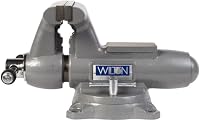
A part too small to hold safely may be better filed while clamped. Choose a bench vise sized for your work and leave the grinder fixed to its bench.
Can you sharpen a knife on a bench grinder?
Use a bench grinder for a blade only when the wheel, blade instructions, and your control suit the job. Thin edges can overheat quickly, and a small mistake can remove more metal than intended.
Follow the existing bevel, use brief contact, and inspect the edge often. Don't wait until the metal changes color to think about heat, and follow the tool instructions for cooling.
For routine kitchen knife care, a stone or guided sharpener usually gives a beginner more control. A grinder is better reserved for suitable shaping or repair work that needs material removed.
The WEN BG625V suits home users who want adjustable speed, pivoting rests, and a flexible work light. Its 2.5-amp motor comes with 36-grit and 80-grit wheels, and WEN backs it with a 2-year warranty.
Skip this model if your main need is extra clearance for long workpieces. Its lower speed setting also doesn't remove the need for short passes and careful heat control.
When should you use a wire wheel?
Use a wire wheel for compatible metal cleaning and rust removal, rather than forming a cutting bevel. It brushes the surface instead of doing the same job as an abrasive grinding wheel.
The DeWalt DW4904 suits users cleaning metal parts who already have a compatible grinder. Its carbon-steel wire makes material compatibility part of the buying decision.
This is an accessory, not a complete grinder, and it isn't a substitute for a sharpening wheel. Don't assume it fits either machine in this guide just because its diameter looks suitable.
Confirm arbor fit, maximum operating speed, guard clearance, and mounting hardware before installation. Present edges as the wheel instructions direct, since wires can catch a corner and pull the work from your grip.
Use light pressure and the required protective gear because wire brushes can shed wires. Pressing harder bends the wires and reduces control.
Who should choose a larger bench grinder?
Choose a larger grinder when workpiece access and material removal matter more than adjustable speed. Allow enough bench space to handle the whole part, including the section extending beyond the wheel.
The DeWalt DW758 suits users shaping metal or working with longer pieces. It has a 3/4 HP induction motor, runs at 3,600 rpm, and uses precision-machined aluminum rests.
Its cast-iron base and motor housing suit a fixed grinding station. Included eye shields and spark deflectors still need inspection and adjustment before use.
Skip it if variable speed is a priority or delicate edge work is your main task. Read the DeWalt DW758 review for more detail, or compare our best bench grinders before choosing a machine.
How do you choose the right wheel and grinder?
Choose the wheel for the material and finish first, then select a grinder that can run it correctly. Wheel diameter alone doesn't tell you whether a setup suits your work.
Coarse abrasive wheels remove material faster and leave deeper scratches. Finer wheels suit lighter shaping and refinement, but grit alone doesn't determine whether a wheel is suitable for a particular tool steel.
Check how easily the rests support your common workpieces. If a task needs a repeatable bevel, confirm that a suitable jig can fit without removing required guards.
Measure the bench, nearby walls, and room for long parts. Our guide to benchtop workshop machines for a home shop helps plan the station, while the grinders and vises guide covers related tools.
If most jobs involve tiny parts or slow, precise shaping, consider hand filing first. Our best bench vises guide can help you choose the support for that work.
How should you care for the grinder and wheels?
Keep the wheel face clean, the clearances correct, and the mounting secure. Inspect the machine again after wheel changes or any new vibration.
A glazed or uneven abrasive wheel may need dressing with a compatible dresser. Follow both manufacturers' instructions, and disconnect power before adjusting rests or guards afterward.
Don't use a dresser on a wire brush. Replace worn or damaged attachments according to their instructions, and store spare abrasive wheels dry and protected from impacts.
What mistakes should you avoid?
Avoid forcing the work, using the wrong attachment, and continuing through unusual vibration. Each can turn a small grinding job into a loss of control.
Don't try to correct a loose rest while the machine runs. Switch off, wait for the wheel to stop, and disconnect power before making adjustments.
Don't grind aluminum or another soft metal on an ordinary wheel unless that wheel is designed for it. Metal can load the abrasive face, so material compatibility matters even for a quick touch-up.
Never stop a coasting wheel with a hand, tool, or scrap. Keep protection on and remain at the machine until it stops.
Which setup should you choose, and how should you finish?
Choose WEN for speed adjustment, DW758 for longer grinding work, and DW4904 for compatible metal cleaning. Choose a slower sharpening method when controlling a fine edge matters more than removing metal quickly.
Knowing how to use a bench grinder includes knowing when to stop: finish the planned pass, inspect the result, and let hot work cool safely. Shut down fully before clearing debris or changing the setup.
If you're still choosing a machine, compare our bench grinder picks against the parts you actually plan to work on.
Frequently asked questions
How do you use a bench grinder safely?
Secure the grinder, inspect its wheel and guards, and wear safety glasses with a face shield. Stand clear of the wheel's plane during startup and let it reach speed before making contact.
Support the work on the rest, apply light pressure, and stop immediately if vibration or sound changes.
How close should the tool rest be to a bench grinder wheel?
Set the tool rest to the clearance required by your grinder manual, and check it again as the wheel wears. Excess space can let a workpiece become trapped between the rest and wheel.
Switch off, wait for a complete stop, and disconnect power before making any adjustment.
Can you sharpen a knife on a bench grinder?
A bench grinder can sharpen some knives, but a fast abrasive wheel can overheat a thin edge or remove too much metal. Follow the blade and grinder instructions, and use a suitable wheel.
For routine kitchen knife care or an angle you can't hold steadily, choose a guided sharpener or sharpening stone.
Should you wear gloves when using a bench grinder?
Follow your grinder manual and workplace rules for hand protection, because gloves can catch in rotating equipment. Never wear loose gloves or use gloves to justify moving your fingers closer to a wheel.
Let hot work cool before handling it, and use a suitable holding tool when the task allows.