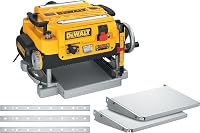
How to Sharpen Thickness Planer Blades
To sharpen thickness planer blades, first find out whether your machine takes disposable reversable knives or resharpenable steel. Disposable blades get flipped or replaced, while steel knives are honed or ground back to a clean edge, then set to the correct height and torqued evenly.
On this page (8 sections)
- How do you know when planer blades need sharpening?
- What kind of blades does your planer use?
- Can you sharpen disposable planer blades at home?
- How do you set up to hone steel planer blades?
- How do you keep the bevel even across the blade?
- How do you put sharpened blades back in the planer?
- When is a new blade set the better call?
- Which method should you choose?
To sharpen thickness planer blades, first find out whether your machine takes disposable reversable knives or resharpenable steel. Disposable blades get flipped to the second edge or replaced, while steel knives are honed or ground back to a clean edge, then set to the correct height and torqued evenly.
The method follows the blade, not the brand. A benchtop planer with laminated double-edged knives is a different job from a cabinet machine with thick steel that a sharpening shop can grind.
How do you know when planer blades need sharpening?
The board tells you before any gauge does. Fine dust instead of fluffy shavings, ridges running the length of the cut, and tearout on figured grain are the usual first signs that the edge has dulled.
Listen as the machine feeds. A planer that starts to bog down or leaves a fuzzy surface on stock it used to finish clean is working harder than it should.
Dull knives also heat up and can leave glazed tracks.
Run a scrap board and look at the surface under a raking light. Snipes at the ends and chatter marks in the middle often trace back to a nicked or worn edge rather than the feed rollers.
Check the knives themselves for nicks and built-up pitch. A small nick leaves a raised line on every board, and hardened resin holds the edge away from the wood.
Clean the blades before you decide they need grinding.
What kind of blades does your planer use?
Double-edged reversable knives are disposable, while solid steel knives can be resharpened. Knowing which you have decides whether you flip, replace or grind.
Many benchtop planers run thin laminated high-speed steel knives with two cutting edges. When one edge dulls, you turn the knife and use the other.
Once both are worn, the set is spent.
Cabinet planers and some jointers carry thicker knives that a sharpening service can grind back several times. Those are worth the cost of professional sharpening over their life.
Read the manual to confirm the blade type and the edge geometry. If you're still choosing a machine, our guide to how to choose a thickness planer covers which models take disposable knives and which take resharpenable steel.
Can you sharpen disposable planer blades at home?
Mostly no. Laminated reversable knives are designed to be flipped and replaced, not honed, because grinding changes the edge angle the cutterhead is set up for.
A light touch with a fine diamond stone can lift a burr or remove a spot of pitch, but that is cleaning, not sharpening. Taking metal off the bevel changes how the knife sits and cuts.
The upside is that replacement sets are cheap and quick to swap. A fresh set restores a clean cut without the setup time a grinding job demands.
Treat a dull double-edged set as a wear item.
If your machine runs solid steel knives, the opposite is true. Those blades reward careful honing or a trip to a sharpening shop, and the edge can come back better than a factory grind.
How do you set up to hone steel planer blades?
Remove the knives, clean them, and match the existing bevel angle before any abrasive touches the edge. The goal is to restore the factory geometry, not invent a new one.
Mark the bevel with a felt-tip pen so you can see where the stone is cutting. A few passes on a flat stone show whether you are holding the angle evenly across the full length.
Use a holder or a rest set to the blade's angle. Planer knives are long and straight, and freehand work tends to rock and round the edge.
A jig keeps the bevel flat and square to the back.
Keep the stone wet or oiled as its type requires, and work in steady strokes along the edge. Check the bevel line often and stop when the pen marks are gone evenly.
Who should choose a bench grinder for knife work?
Choose a bench grinder if you want a dedicated station for grinding and honing steel edges, not just planer knives. A slow, controlled pass on a fine wheel can restore a bevel that hand honing can't reach.
The DeWalt DW758 runs a 3/4 HP induction motor at 3,600 rpm, with a cast iron base and housing for stability. Its 12-1/2-inch span between wheels gives room for longer work, and the machined aluminum tool rests help you hold an angle.
It arrives with a 36 grit and a 60 grit wheel plus eye shields and spark deflectors. For planer knives you want a light touch and a fine wheel, so practice on scrap steel first and keep the blade cool to avoid drawing the temper.
Skip a grinder if you only flip disposable knives. It earns its place when you sharpen chisels, plane irons and reusable planer steel on a regular basis.
Why put the grinder on a stand?
A grinder that walks across the bench is hard to control. A dedicated stand holds the machine steady so your hands can focus on the blade angle instead of chasing the tool.
The WEN 4288T is a cast iron and steel pedestal that stands 31.5 inches tall. Its 9.9 by 12.4 inch mounting plate takes a range of bolt patterns, and the three-legged base has holes for fastening it to the floor.
The onboard water pot lets you quench a blade before it overheats, which matters on thin planer steel. WEN says the design fits most bench grinders on the market, not just its own line.
Skip the stand if your grinder already sits on a solid, bolted-down bench. It's the right buy when vibration is the problem and you want the grinder off the work surface.
How do you keep the bevel even across the blade?
Hold the blade flat against the abrasive and check the bevel line as you go. An even bevel across the full width is what gives you a clean cut, not a razor edge on one corner.
Work the whole edge in overlapping passes rather than scrubbing at a nick. If one spot needs extra attention, take a few light strokes there and then blend the rest of the edge to match.
Alternate sides when you can. Honing the flat back and the bevel in turn keeps the edge centered and avoids a wire burr that breaks off in the cut.
Finish on a finer stone than you started with. A polished bevel cuts cleaner and lasts longer than a coarse one, even though both feel sharp to the touch.
How do you put sharpened blades back in the planer?
Seat each knife in its slot, set the height, and tighten evenly before the machine runs. A knife that sits high on one end will leave a step in every board.
Clean the cutterhead slots first so chips and pitch don't hold a blade off its seat. Machined locator holes in the knife help you line it up quickly during the change.
Snug the bolts in stages, working from the middle outward. Overtightening one end can cock the knife and throw off the height across the head.
Check the height with a dial indicator or a straightedge across the cutterhead. Turn the head by hand and watch for a blade that stands proud before you plug the machine in.
When is a new blade set the better call?
If the edge is nicked across much of its width or the knives have been ground thin, a fresh set is the practical answer. Replacing removes the guesswork about angle and height.
The Asieg Tool set fits the DeWalt DW734 and DW7342 thickness planers. It arrives as 2 sets of 3 blades, 6 pieces in all, in a plastic case.
Each knife is 12.5 inches (320mm) by 7/8 inch (22.3mm) by 1/16 inch (1.6mm).
The blades are HSS rated at HRC 63 to 65, double-edged and reversable, so you get two cutting edges per knife. The locator holes line up on the cutterhead for a faster change.
Treat them as sharp and keep them away from children.
Check your model number first. These fit the DW734 and DW7342 only, so measure your existing knives before ordering.
If you're still shopping for the machine itself, our DeWalt DW735X review covers a three-knife planer with a different blade setup.
Which method should you choose?
Flip or replace disposable knives, and hone or grind steel ones. That one split decides how much time and money the job takes.
For double-edged HSS knives, keep a spare set on the shelf and swap it in when the cut turns fuzzy. For reusable steel, a bench grinder plus a steady stand gives you a repeatable edge at home, and a sharpening shop handles the rest.
Set the blades back at the right height and torque them evenly, then run a scrap board to confirm the cut. For feed and depth settings once the knives are in, see how to use a thickness planer.
If you're comparing machines before you buy, start with our roundup of the best thickness planers.
Frequently asked questions
How often should planer knives be sharpened?
It depends on how much lumber you run and how dirty it is. Watch the chips and the surface: fine dust instead of fluffy shavings, or ridges and tearout on the board, mean the edge needs attention long before a calendar date tells you.
Can I sharpen planer blades without a jig?
You can hone a straight knife freehand on a flat stone, but holding the bevel steady over the full 12 to 13 inches by hand is hard. A simple holder or a rest set to the factory angle keeps the edge square and even, which matters more than the grit you finish on.
Do planer blades need to be set after sharpening?
Yes. Once a knife comes out, it has to go back at the right height and be tightened evenly across the cutterhead.
Machined locator holes or a setting jig help you line up each blade, and a dial indicator or straightedge confirms the height before you run a board.
Is it cheaper to sharpen planer blades or replace them?
For disposable double-edged knives, replacing is the normal path and usually costs less than paying a shop to grind them. Reusable steel knives are worth professional sharpening over several cycles, so weigh the blade type against how much wood you plane.